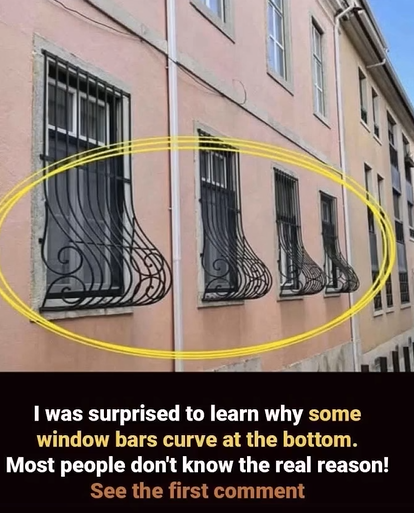
If you’ve ever noticed window bars that curve outward near the bottom, you may have wondered why they’re shaped that way. These distinctive designs, often called “potbellied” window bars, carry both charm and purpose. While they add character to older buildings, their form wasn’t created for aesthetics alone — it developed from a blend of practicality and daily life.
Window bars were originally installed to keep homes secure while still allowing fresh air and sunlight to flow inside. Early versions were flat, set close to the wall. But in crowded neighborhoods where every inch of space mattered, people began curving the bars outward. That small adjustment created enough room for flower pots, laundry, or simply a spot to lean out and greet a passing neighbor.
Over time, these curved bars came to represent more than safety — they became symbols of connection and community. In many cities, they acted like miniature balconies, offering a bit of openness where space was scarce. For families whose windows were their link to the outside world, that extra curve allowed for light, laughter, and moments of simple human interaction.
Today, these designs still appear in historic districts around the globe. They stand as reminders of how creativity can turn necessity into beauty. The next time you pass a home with curved window bars, you’ll see more than a safety feature — you’ll glimpse a story of ingenuity, warmth, and the timeless desire to make even the smallest spaces feel alive.