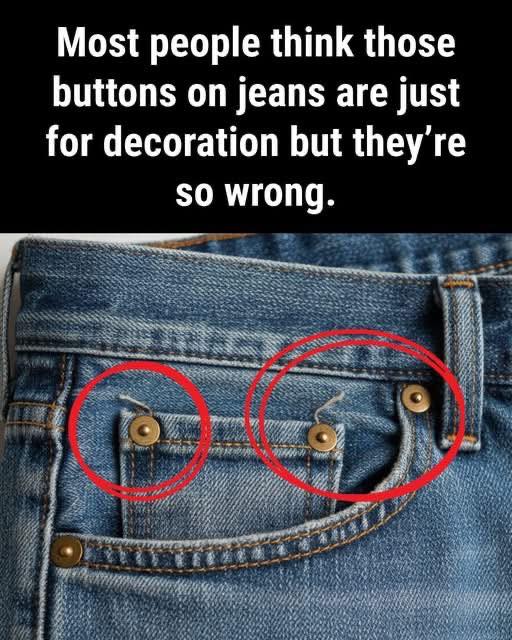
Most people don’t realize that the small metal buttons on their jeans serve an important purpose. These pieces, called rivets, are more than decorative—they help reinforce areas of the fabric that experience the most tension. Placed near pockets and other stress points, rivets strengthen the material and reduce the chances of tearing, which is why many jeans remain durable even with frequent wear.
The use of rivets dates back to the 1870s, when jeans were created as sturdy workwear for miners, railroad workers, and other laborers. Jacob Davis, a tailor, received repeated requests from customers whose pants were tearing at the seams. To address the problem, he added metal rivets to key areas for reinforcement. He later partnered with Levi Strauss, and in 1873 they patented the riveted jean design—an innovation that helped transform practical work pants into a long-lasting global fashion staple.
Rivets function by distributing tension across the denim fabric so that strain doesn’t focus on a single point. Typically made from materials like copper or brass, they resist rust and help prevent holes from forming near pockets and openings. Even today, jeans without rivets may wear out faster in these areas, demonstrating that the small metal pieces continue to play a valuable role in durability. Over time, rivets also became associated with classic denim craftsmanship.
While many brands still use rivets for strength and style, others opt for reinforced stitching to improve comfort. Whether used for practical support or as a design detail, rivets reflect the history and heritage of denim. The next time you put on your favorite pair of jeans, those tiny metal accents offer a reminder of more than a century of innovation and tradition.