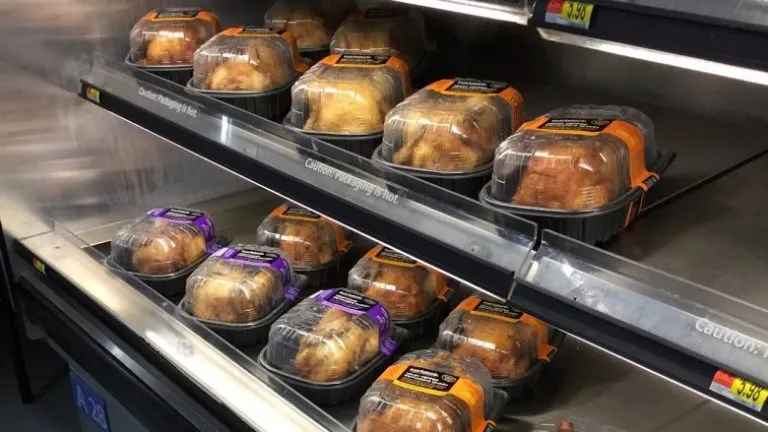
Rotisserie chicken is a popular option for quick and affordable meals, but it’s worth taking a moment to check a few details before buying one. Start by reviewing the label to confirm that the production and expiration dates are clear and current. Fresh labeling helps ensure the chicken is still within a safe time frame for consumption. It’s also important to observe how the chicken is stored in the display. Whether it is kept warm or chilled, proper temperature control is essential for maintaining quality and safety.
Next, examine the packaging carefully. The container should be clean, fully sealed, and free from cracks, leaks, or excess moisture. Packaging issues can indicate improper handling or exposure. After that, take a look at the chicken itself. A good rotisserie chicken typically has an even, golden-brown color and a pleasant, roasted aroma. If you notice unusual odors, excessive moisture, or discoloration, it’s best to choose a different one.
Checking the ingredient and nutrition information is also a helpful step. Some store-prepared chickens include added seasonings, preservatives, or higher sodium levels. Reviewing the label allows you to decide whether the product fits your dietary preferences or health goals. Even a quick look can provide useful insight into what you’re bringing home.
For those who purchase rotisserie chicken frequently, preparing one at home can be an alternative worth considering. Cooking your own allows full control over ingredients and freshness, and it can be planned ahead to save time. Store-bought rotisserie chickens are convenient and widely enjoyed, but paying attention to these simple checks can help ensure the meal you choose is fresh, well-handled, and suitable for your needs.