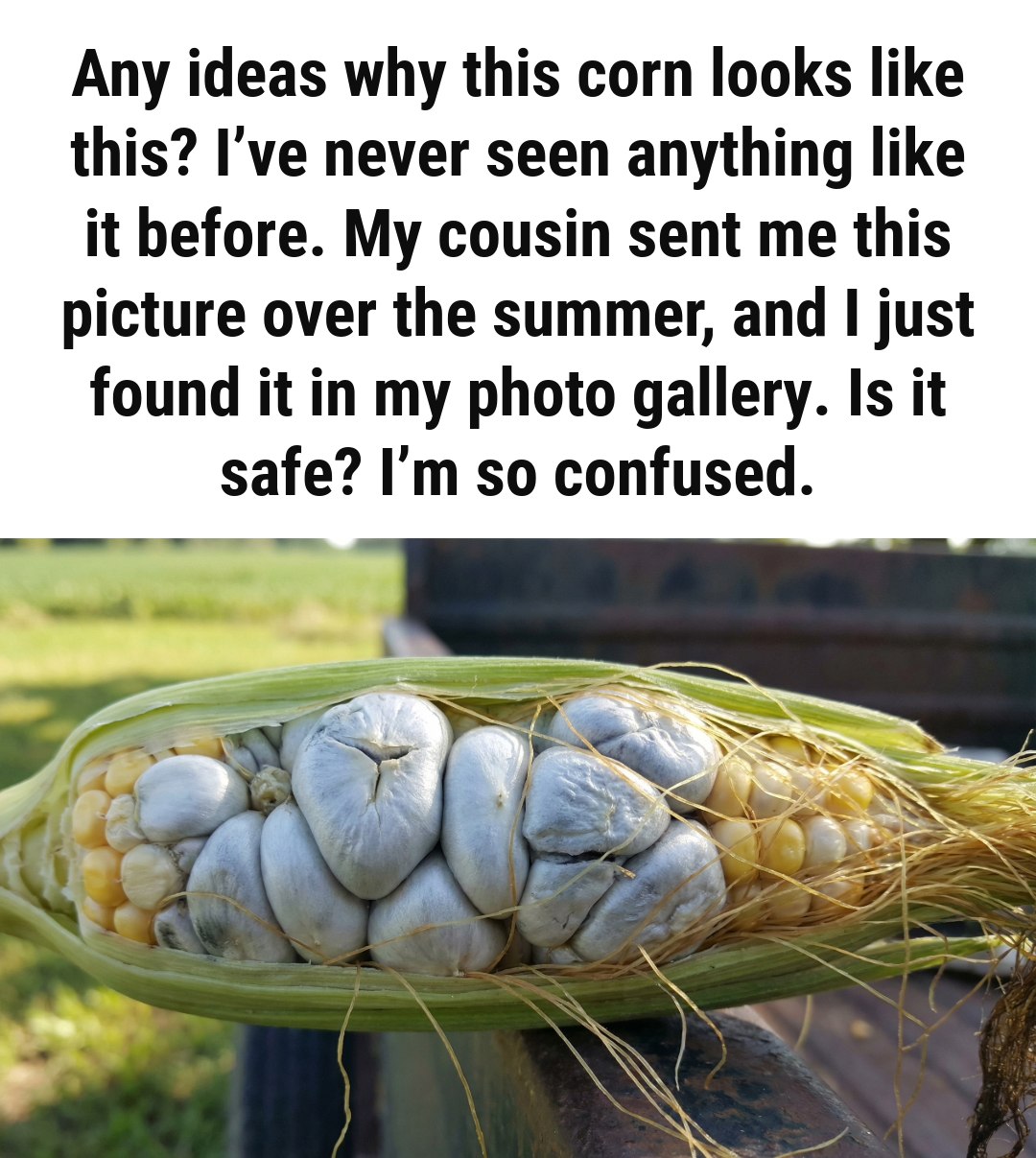
If you grow corn at home or purchase it fresh from a farm stand, you may occasionally notice swollen, irregular growths where kernels usually form. This appearance can be surprising, and many people assume the corn has spoiled. In fact, this change is caused by corn smut, a naturally occurring fungus that has existed alongside corn crops for centuries. Its presence is not a sign of poor quality or contamination, but part of a natural agricultural process.
Corn smut develops when fungal spores settle on corn plants, typically during warm and moist conditions. The spores often enter through small openings created by insects, wind, or weather damage. Instead of forming normal kernels, the affected areas expand into soft, rounded growths that begin light in color and darken as they mature. This can happen even in carefully managed fields or gardens, making it a normal occurrence rather than a farming error.
Many people then wonder whether corn smut is safe to eat. When harvested at the right stage—while it is still firm, moist, and light-colored—it is considered edible. At this point, it has a mild scent and a texture that works well in cooking. If it becomes dry, powdery, or develops a strong odor, it should be discarded. Deciding whether to eat it comes down to personal choice, but when fresh, it does not pose a health concern.
In some cuisines, especially in Mexico, corn smut is valued for its earthy, mushroom-like flavor and is used in a variety of dishes. Rather than being a reason to discard the corn, its appearance can be seen as an unexpected option. Understanding what corn smut is helps replace uncertainty with knowledge, allowing growers and shoppers to make informed decisions about how to handle it.