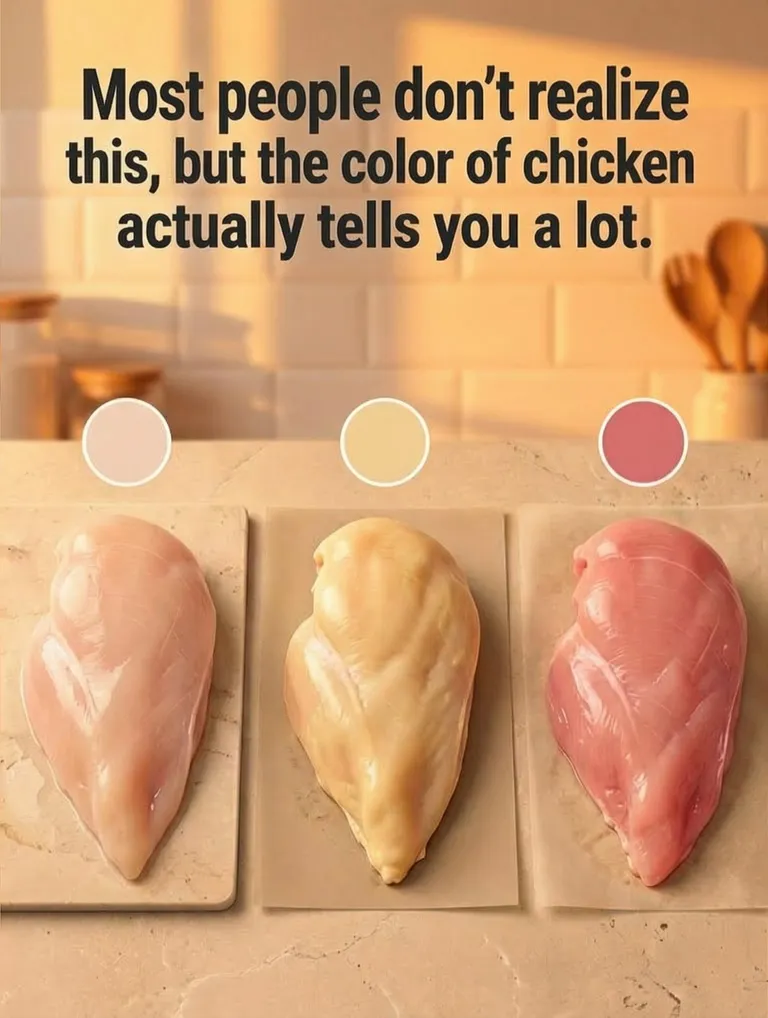
When standing in a grocery aisle, many shoppers hesitate while looking at packaged chicken. One option may appear pale with a light pink tone, while another shows a deeper yellow shade. Even when the cut and price are similar, the color difference often causes confusion. Some people naturally assume that darker or yellower chicken is healthier or more natural, while paler meat feels less desirable. In reality, chicken color alone does not provide a complete or accurate picture of quality, nutrition, or safety.
In most supermarkets, lighter-colored chicken comes from common commercial farming systems. These chickens are usually raised indoors, selected for fast growth, and fed balanced diets designed for consistency and efficiency. This approach results in affordable chicken with a mild taste and uniform appearance, which explains why pale meat is widely available. Although lighter color is sometimes associated with lower quality, it is generally safe and nutritious when stored and cooked correctly. The appearance reflects the production method rather than freshness or nutritional value.
Chicken with a yellow tone is often influenced by diet, particularly feed that contains corn or other natural pigments. These ingredients can add color to the skin and fat, giving the chicken a richer yellow appearance. Birds that grow at a slower pace or have more room to move may also develop firmer texture and stronger flavor, which some people prefer. However, color can be intentionally enhanced, as some producers adjust feed formulas to meet consumer expectations rather than to reflect different living conditions.
Because of these factors, color should not be the main deciding factor when choosing chicken. More reliable indicators include product labels such as organic, pasture-raised, or Certified Humane, which provide insight into how the animal was raised. Freshness cues like a neutral smell, firm texture, and clear expiration dates are also more important than appearance. There is no single ideal chicken color, and the best choice depends on personal values, taste preferences, and interest in farming practices. Color is only one small detail within a much broader evaluation.