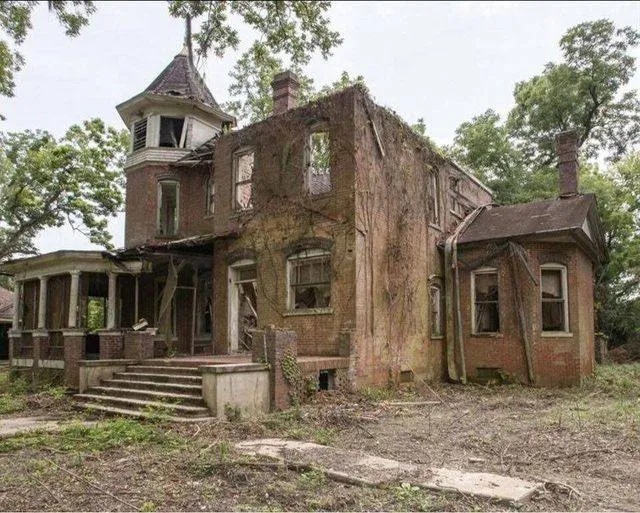
An urban explorer documented a remarkable brick mansion constructed in 1899 for an Alabama state senator, capturing a home that still reflects pride, ambition, and permanence despite decades of abandonment. Even in its neglected state, the mansion conveys the confidence of a bygone era, when homes were designed not only for comfort but also as symbols of status and legacy. Its presence offers a rare glimpse into the past and the values that shaped such grand residences.
The mansion was designed in a blend of Imperial Revival and Queen Anne architectural styles, giving it a distinctive and elegant appearance. Features such as a turret, ornate brick detailing, and tall windows highlight the craftsmanship of the period. With five bedrooms and generous interior spaces, the layout suggests a home intended for both everyday family life and formal social gatherings, combining function with visual impact.
Much of the structure’s longevity can be credited to the materials used in its construction. The original owners were closely connected to brick manufacturing, resulting in exceptionally thick exterior walls that provided durability and strength. A columned veranda remains standing, reinforcing the impression that the home was built with long-term endurance in mind, even as time and weather have taken their toll.
Inside the mansion, signs of deterioration are evident, including collapsed sections of the roof and damaged fireplaces. After being abandoned in the late twentieth century, the property gradually declined, yet it continues to stand as a reminder of architectural resilience. The mansion illustrates how solid design and materials can preserve a structure for generations, while also showing how neglect can slowly erase even the grandest achievements of the past.