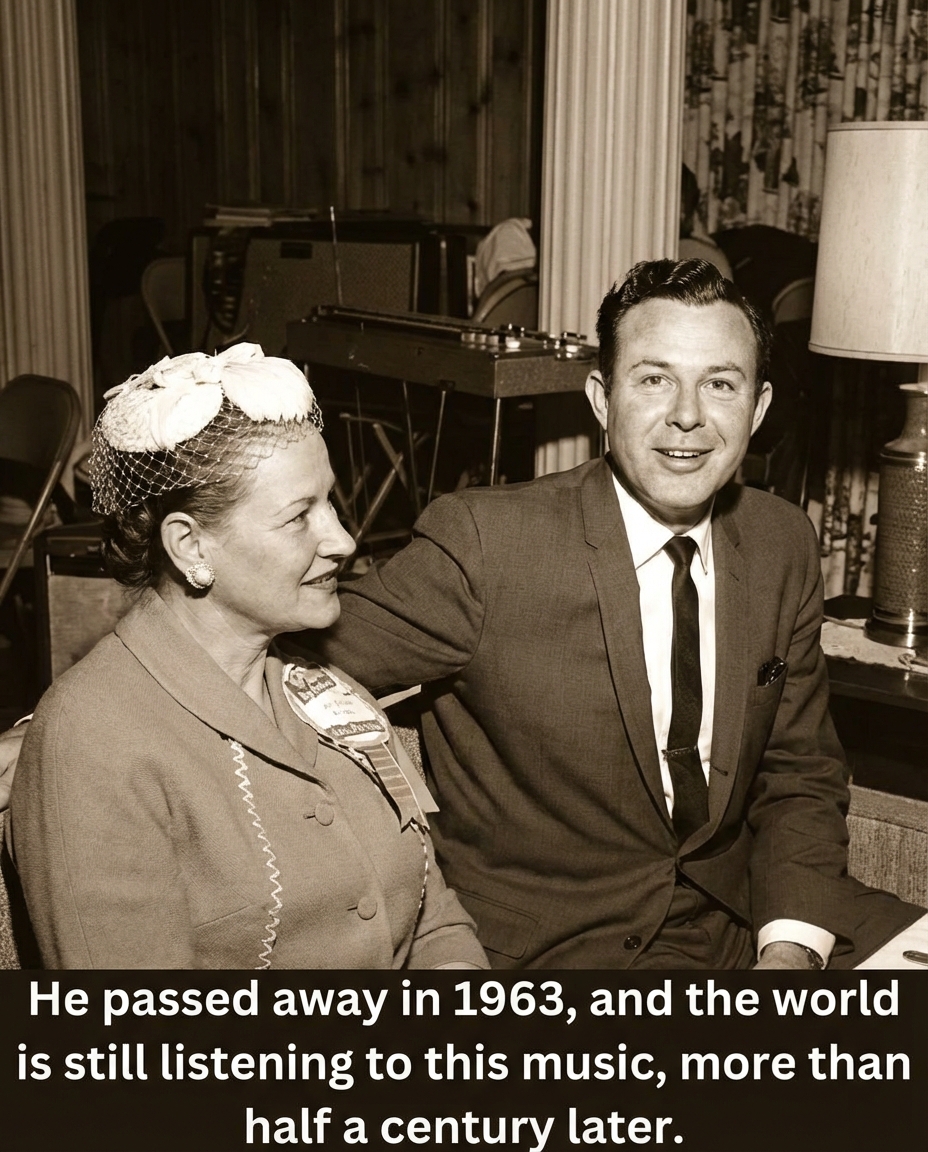
In 1960, Jim Reeves released a song that went beyond chart success and settled into lasting musical memory. “He’ll Have to Go” stood out for its calm delivery, emotional honesty, and smooth blend of country and pop influences. The recording drew listeners in with a gentle, conversational tone that felt personal and sincere. Decades later, it continues to resonate because of its simplicity and emotional clarity rather than dramatic flair.
Reeves was widely admired for his polished yet heartfelt style, earning him a reputation for bringing refinement to country music without losing its emotional core. Raised in Texas and experienced in radio before recording, he developed a sound that felt welcoming and confident. By the time this song was released, he was already well respected, but this recording expanded his reach and introduced his voice to a broader audience. It demonstrated how restraint and warmth could be just as powerful as intensity.
The inspiration behind the song added to its impact. Written after a real-life moment overheard during a phone call, the lyrics captured vulnerability and longing in a way that felt authentic. Reeves’ recording kept the arrangement understated, allowing the emotion to come through naturally. The song achieved major success on both country and pop charts, showing that heartfelt storytelling could cross genre boundaries and connect with many listeners.
Over time, the song became influential, helping shape a smoother style of country music and inspiring numerous later interpretations. Although Reeves’ career was cut short in the mid-1960s, his work continues to be celebrated. “He’ll Have to Go” remains a defining example of how a quiet, thoughtful performance can leave a lasting impression, continuing to move listeners long after its original release.