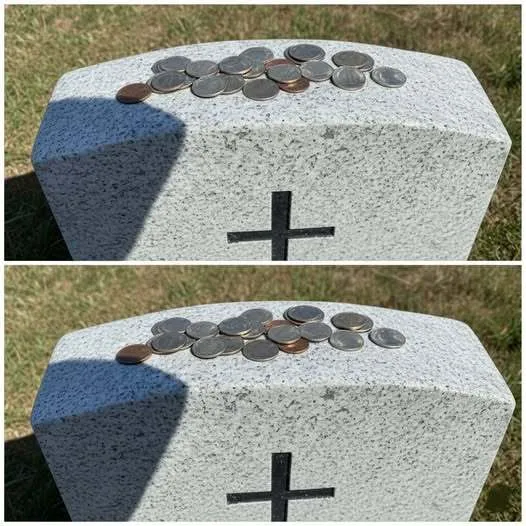
At first glance, a few coins resting on a gravestone may seem easy to overlook, blending in among flowers and flags. In military cemeteries across the United States, however, those coins carry a meaning far deeper than their appearance suggests. They are not forgotten change or random objects. They are intentional symbols—quiet messages of remembrance and respect—left behind by those who wish to honor fallen service members without drawing attention to themselves.
The practice of leaving coins has roots that reach back to ancient cultures, but its modern meaning in the United States developed during the Vietnam War era. That period was marked by social division, and many veterans struggled to express grief openly. In response, a silent tradition emerged. Leaving a coin on a grave became a private way to acknowledge loss and connection, allowing remembrance without debate or explanation. Over time, this gesture became a shared understanding among those connected to military service.
Each type of coin carries a specific message. A penny simply indicates that someone visited and took a moment to remember. A nickel signifies that the visitor trained with the person buried there. A dime means they served together during active duty. A quarter holds the most weight, indicating that the visitor was present at the time of the service member’s passing. These meanings turn small coins into powerful symbols of shared experience and respect.
For families, finding these coins can be deeply meaningful. Each one is a quiet assurance that their loved one is remembered and that bonds formed through service have endured. The tradition offers comfort without ceremony, showing that honor does not always require words. Sometimes, it is expressed through simple actions that carry lasting significance, reminding us that remembrance can be both humble and profound.