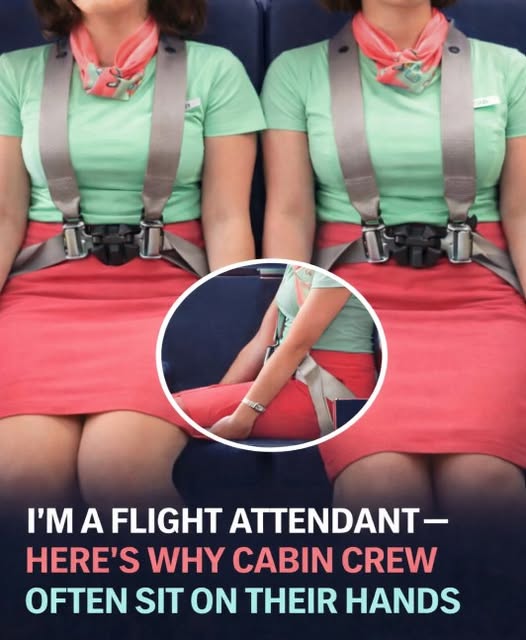
During takeoff and landing, passengers may notice flight attendants seated upright on jump seats with their hands positioned beneath their thighs. While this posture can appear uncomfortable, it is a deliberate safety practice rather than a habit. Known as a standardized brace position, it is used during the most critical phases of flight when heightened awareness and readiness are required.
These moments involve rapid changes in speed and altitude, leaving little time to respond if an unexpected situation arises. Flight attendants are trained to sit in a way that helps reduce the risk of injury and maintain stability. Securing the hands limits sudden arm movement during abrupt stops and helps protect the upper body, allowing crew members to remain controlled and prepared to act immediately if needed.
Beyond physical safety, the position supports mental focus. While seated this way, flight attendants actively monitor the cabin, listen for unusual sounds, and remain alert to any changes. Minimizing movement helps eliminate distractions, reinforcing concentration during a time when quick assessment and clear judgment are essential. Training emphasizes calm awareness so crew members can transition quickly into action if required.
This approach also reflects the different roles of passengers and crew during these phases of flight. While passengers are instructed to brace for personal protection, flight attendants remain upright to enable swift movement and assistance. The posture represents just one element of comprehensive safety training that includes emergency procedures, evacuation readiness, and passenger support. Rather than a simple routine, it signals preparedness and responsibility during the most sensitive moments of air travel.