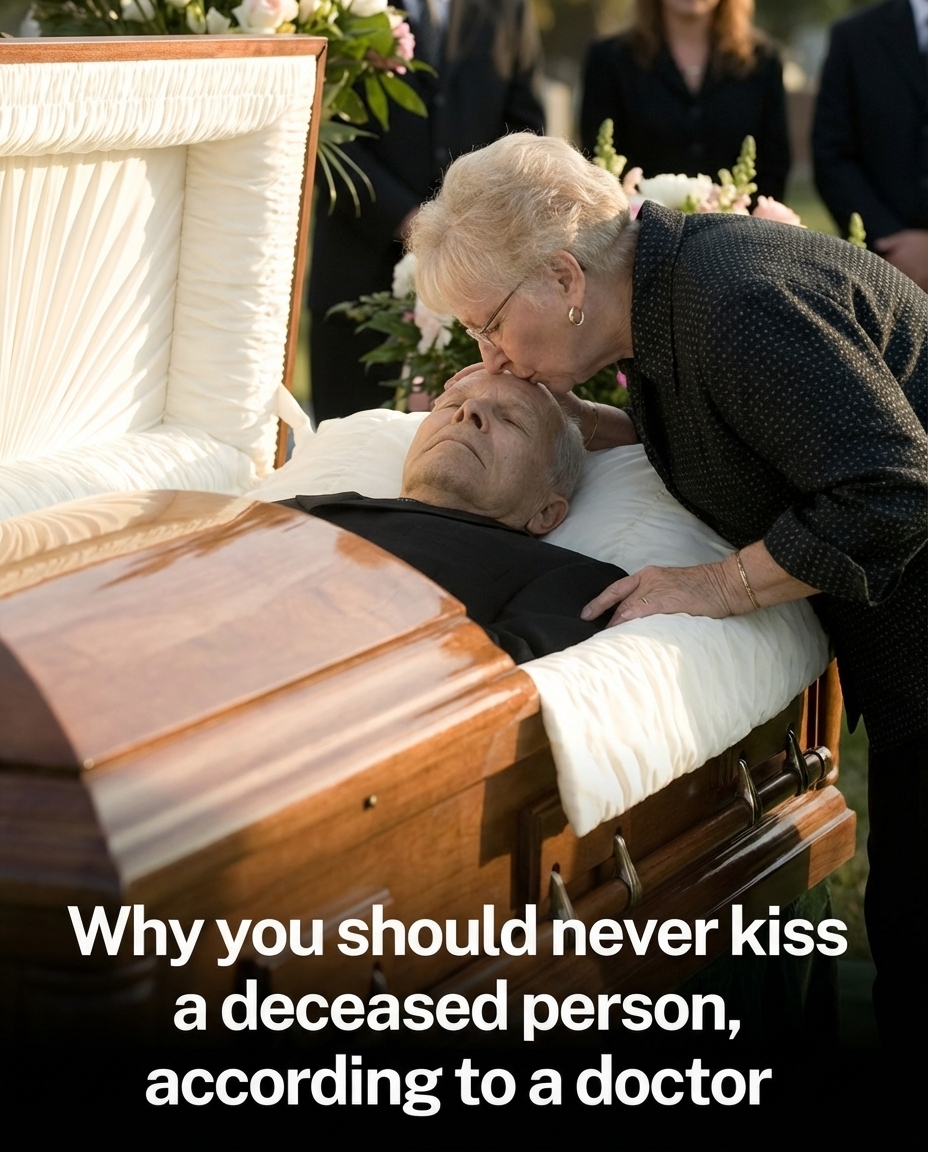
In moments of grief, many people are guided by instinct rather than thought. A final kiss on the forehead or a gentle touch can feel like a natural and deeply meaningful way to say goodbye. In recent years, however, some medical professionals have encouraged families to pause and consider health-related factors during these moments. What can feel like an unwelcome interruption of a personal ritual has led to conversations about balancing emotional closure with physical well-being during a highly sensitive time.
Medical guidance on this topic is based on the understanding that biological processes do not stop instantly after death. In certain situations, particularly when a person has passed away from an infectious illness, microorganisms may remain present on the body for a limited period. Because the immune system is no longer active, there is a small possibility that bacteria or viruses could still be present on the skin or around the face shortly after death. Health experts emphasize that the overall risk is usually low, but awareness is important, especially before the body has been prepared by professionals.
These recommendations can be emotionally challenging for families. In many cultures and traditions, physical contact with the deceased is an important part of mourning and remembrance. Being advised to avoid that contact may feel distressing or disruptive to the grieving process. Mental health professionals acknowledge that rituals surrounding loss play a key role in emotional healing, and sudden changes to those practices can intensify feelings of sorrow or incompleteness.
Today, many experts suggest a thoughtful, individualized approach. Families are often encouraged to speak with healthcare providers or funeral professionals about the specific circumstances involved. In some cases, alternatives such as waiting until preparation is complete or choosing a different form of touch can help maintain both safety and dignity. The intention is not to remove comfort, but to provide information. With understanding and guidance, families can make choices that respect both their emotional needs and practical considerations during farewell moments.