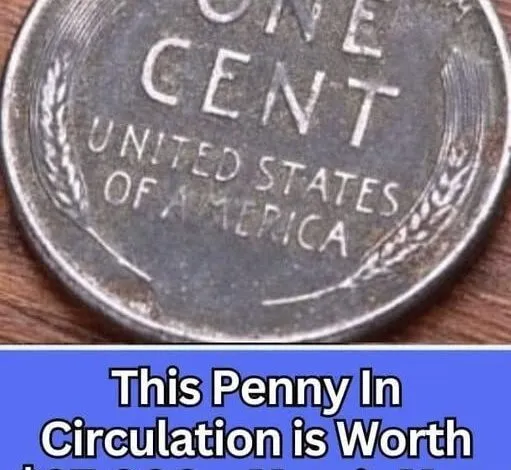
Most people drop pennies into jars or drawers without much thought, assuming they hold little value. However, among everyday coins, there are a few rare examples that attract significant interest from collectors. One such coin is the 1943 copper wheat penny. During World War II, copper was redirected for military use, and pennies were primarily produced using zinc-coated steel. A small number of copper blanks, however, were mistakenly used, creating a limited group of coins that are now considered highly collectible.
Because only a very small number of authentic 1943 copper pennies are known to exist, their rarity has made them valuable within the numismatic community. Over time, this has also led to the appearance of altered or imitation coins. Common examples include modified dates on later pennies or steel pennies treated to resemble copper. These imitations highlight the importance of careful examination when identifying potentially rare coins.
One simple method often mentioned by collectors involves checking the coin’s reaction to a magnet. Steel-based pennies are magnetic, while copper ones are not. A genuine copper coin from that year would not be attracted to a magnet. Visual details such as the wheat-ear design on the reverse and the coin’s overall color can also provide clues, although these features alone are not enough to confirm authenticity.
Coins like this sometimes surface in old collections, storage containers, or inherited items that have gone untouched for years. If someone believes they may have found a rare penny, the next step is to seek evaluation from a qualified coin professional. Proper authentication helps determine the coin’s true nature and value. The story of the 1943 copper penny serves as a reminder that even familiar objects can carry historical significance and unexpected interest when examined closely.