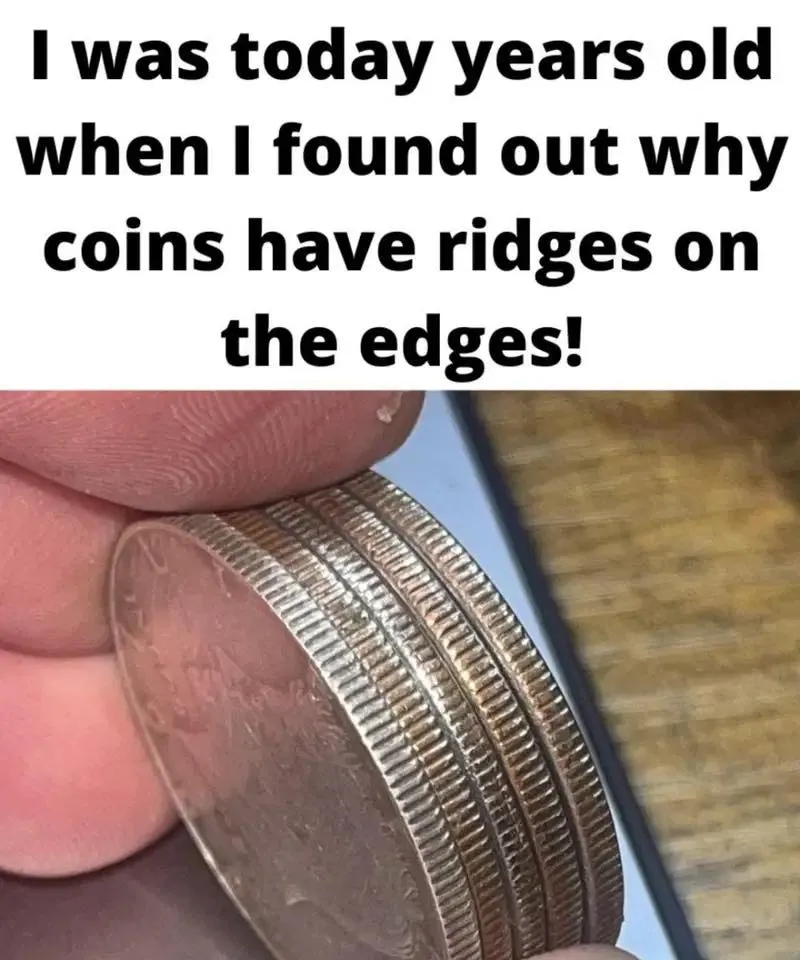
You’ve handled coins countless times without giving them much thought. They pass through daily routines effortlessly, exchanged, stored, or carried without notice. Yet along the edge of many coins is a precise detail that serves a real purpose. Those tiny grooves are not decorative or accidental. They are a functional design choice rooted in history, created to protect trust in money at a time when currency itself was vulnerable to misuse.
Several centuries ago, coins were commonly made from valuable metals, which created an opportunity for abuse. Some individuals would remove small amounts of material from coin edges, keeping the metal while leaving the coin usable in appearance. Over time, this practice caused widespread problems, weakening confidence in currency and disrupting economic stability. Authorities recognized that even small losses, repeated across many coins, could have serious consequences, making a reliable solution necessary.
A major turning point came in the late 17th century with the involvement of Isaac Newton, who served at the Royal Mint in England. He supported the introduction of reeded, or ridged, coin edges. This design made any alteration immediately noticeable, as an uneven edge would stand out against a uniform pattern. The innovation proved highly effective and became one of the earliest examples of practical anti-fraud design in currency production.
Although modern coins are no longer made from precious metals, ridged edges remain important. They assist machines in identifying genuine currency and help people distinguish coins by touch, including individuals with visual impairments. The design also preserves a sense of continuity, connecting today’s money to centuries of careful craftsmanship. Those small grooves endure as a reminder that thoughtful design can protect value, promote trust, and carry history forward in even the simplest objects.