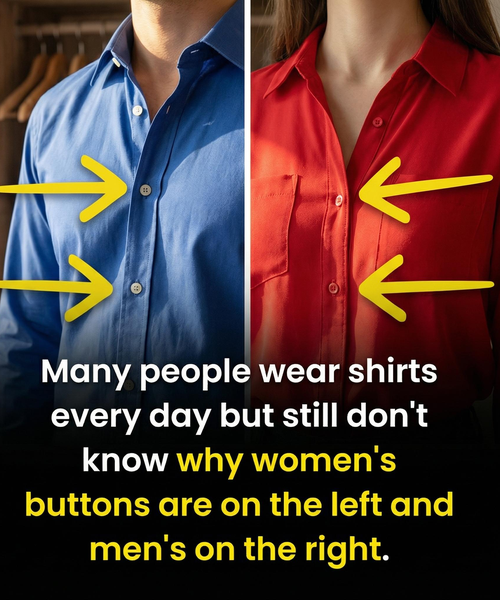
If you have ever noticed that buttons on women’s shirts are placed on the left while men’s buttons are typically on the right, the difference may seem minor but it has deep historical roots. This design detail has existed for centuries and continues to appear in modern clothing. Rather than being a recent fashion choice, it reflects long-standing traditions shaped by social structure, daily habits, and practical considerations. What started as a functional decision gradually became a standard that remains widely used today.
The origins of this distinction trace back to Europe in the eighteenth and nineteenth centuries, when clothing was closely linked to social class. Many women from wealthy households did not dress themselves and instead relied on attendants to help them with their garments. Since most assistants were right-handed, women’s clothing was designed to make fastening buttons easier for someone standing in front of them. Placing buttons on the left side allowed the helper to work more efficiently, even though it offered no particular benefit to the wearer.
Over time, this design choice also became associated with social identity and tradition. Being assisted while dressing was once a visible sign of status, and women’s fashion reflected that reality. During the Victorian period, clothing often reinforced cultural expectations, with women’s attire emphasizing refinement and formality. In contrast, men’s clothing focused on independence and practicality. Buttons on the right side suited everyday movement and were especially functional for workwear and uniforms, which influenced men’s fashion for generations.
As lifestyles changed, the original practical reasons behind button placement became less relevant. Women began dressing themselves, and clothing no longer needed to accommodate the customs of earlier eras. Despite this, the tradition remained. Fashion often preserves familiar patterns long after their purpose has faded. Today, button placement is largely symbolic, serving as a reminder that clothing carries history as well as style. Small design details continue to reflect customs from the past, quietly connecting modern wardrobes to earlier social traditions.