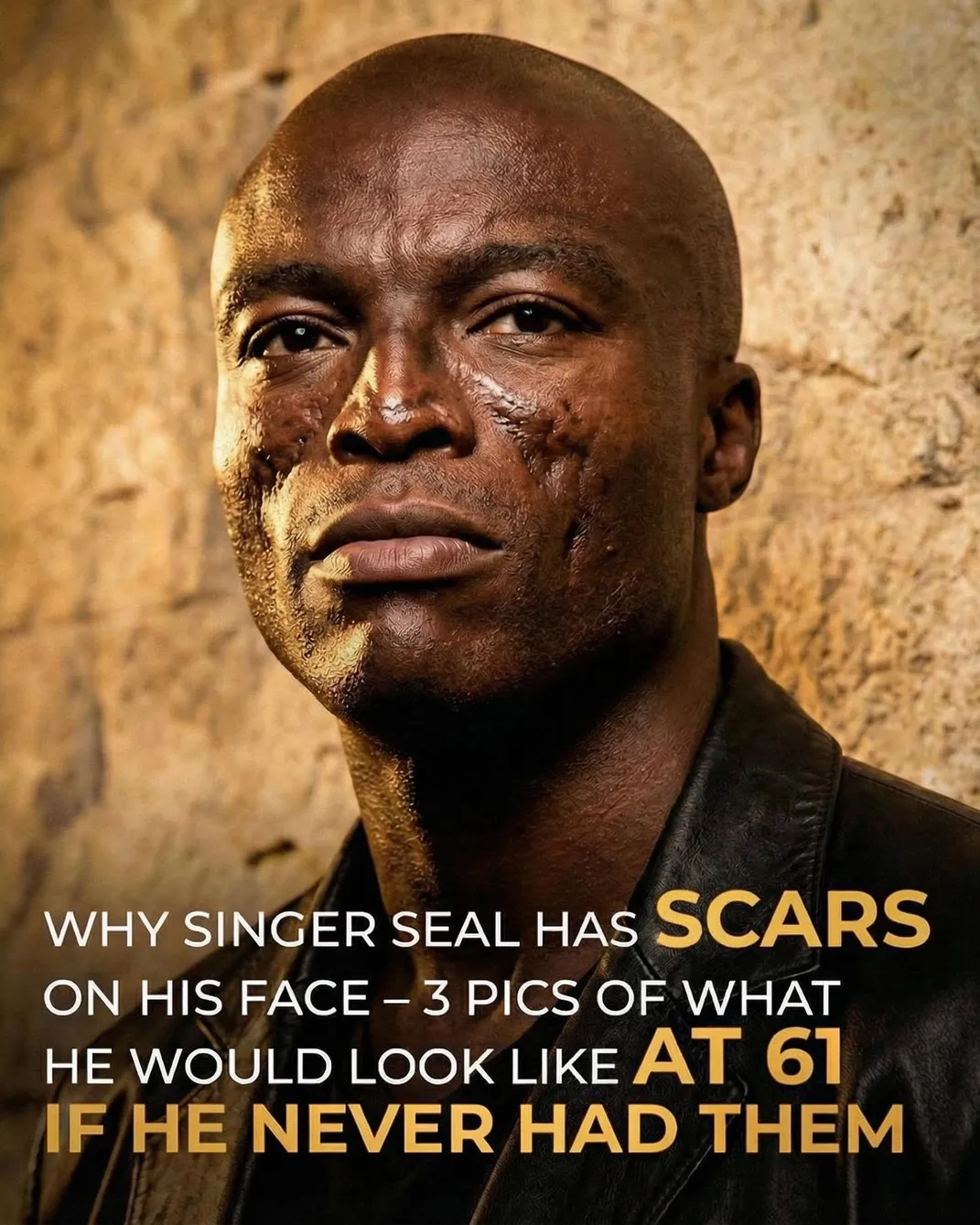
Seal is widely known for his powerful vocals, emotional expression, and the facial scars that have become part of his recognizable appearance. Many people are unaware that these marks are connected to a rare medical condition that developed when he was in his early twenties. What began as a small change on his skin led to years of uncertainty, repeated medical consultations, and delayed answers. During this period, he faced both physical discomfort and emotional challenges, gaining early experience in resilience and self-acceptance.
Born in London in 1963, Seal experienced a difficult upbringing that shaped his outlook on life. Of Nigerian heritage, he spent time in foster care before growing up in a challenging home environment. Despite these early struggles, music became a source of focus and stability. His career gained momentum through a collaboration with Adamski on the song Killer, which reached the top of the U.K. charts and opened the door to wider recognition.
In 1991, he released his self-titled debut album, which included the widely successful single Crazy. The song’s reflective tone and distinctive sound connected with audiences internationally and helped establish his presence in contemporary music. A second album followed in 1994, further demonstrating his range and artistic depth. Throughout this period, his facial scars were visible, contributing to his individuality in an industry often centered on traditional image standards.
Over time, Seal chose to accept his appearance as part of his personal story rather than something to conceal. While modern technology can offer visual interpretations of how he might appear without the scars, those images do little to define his legacy. His lasting influence comes from his authenticity, determination, and emotional honesty as an artist, qualities that continue to resonate with listeners across generations.