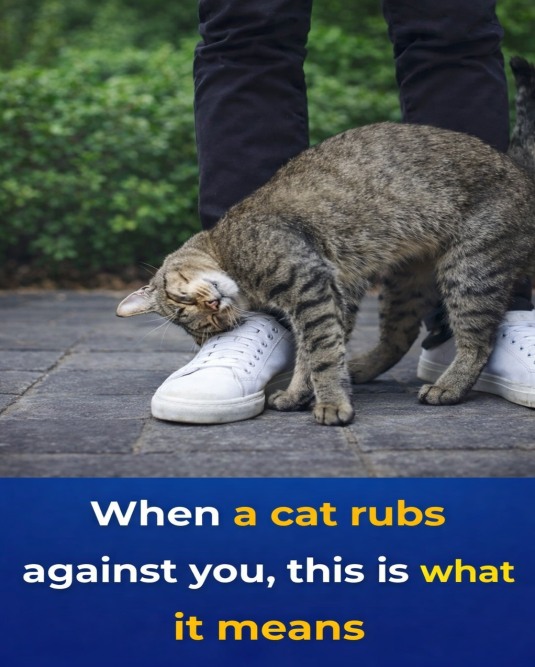
When you arrive home and your cat circles your legs, presses their head against your hand, or brushes past you while purring, the behavior can feel comforting and familiar. This routine often continues as they follow you from room to room, gently making contact along the way. While it may seem like a simple sign of affection, this action carries deeper meaning rooted in natural feline behavior.
This rubbing behavior is a form of communication commonly referred to as bunting or scent sharing. Cats rely strongly on scent to understand their surroundings and feel secure. They have scent glands located on areas such as the cheeks, head, sides, and tail. When a cat rubs against you, they are transferring their scent, which helps them identify you as familiar and safe. It is a quiet but clear signal of trust and comfort.
Rubbing also serves as a form of greeting. Cats do not express welcome through vocal cues in the same way people do, so physical contact becomes their method of acknowledgment. A relaxed body posture and an upright tail often indicate positive emotion. This behavior can also help reduce stress, as the movement itself promotes calmness and reinforces a sense of routine and stability.
In addition, rubbing plays an important role in strengthening social bonds. Cats naturally use this behavior with others they feel connected to, whether in shared environments or close social groups. When your cat rubs against you, they are extending that same social interaction. It reflects acceptance and familiarity, signaling that they view you as part of their trusted environment and daily life.