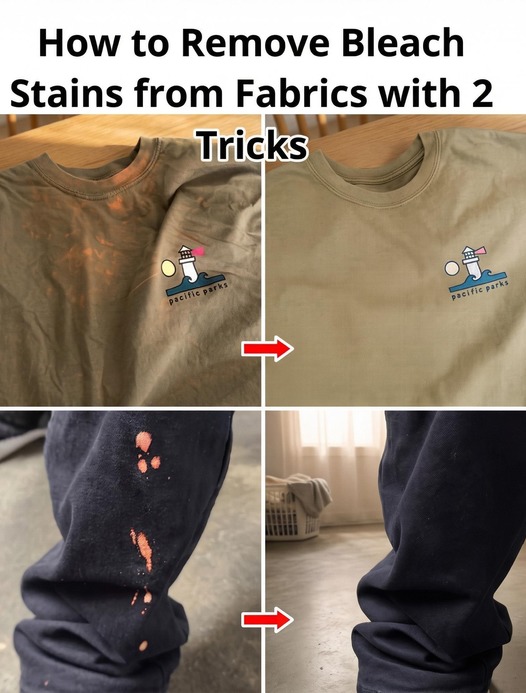
Bleach marks on colored clothing are a common household issue that can feel discouraging at first. A small splash during cleaning or a simple laundry error can leave light patches that stand out clearly against the original fabric color. Because bleach removes dye instead of leaving a residue, the fabric itself is usually undamaged, even though the color change looks permanent. As a result, many perfectly usable garments are set aside or discarded, even when they are otherwise in good condition. Understanding how bleach affects fabric helps make the problem feel more manageable.
Unlike typical stains caused by food or dirt, bleach changes the color of fabric fibers, which is why regular stain removers often do not work. This leads many people to believe that replacing or fully re-dyeing the item is the only option. While restoring the original color completely is difficult, there are practical ways to reduce how noticeable bleach marks appear. These approaches focus on minimizing contrast and improving overall appearance, helping extend the life of clothing and reduce unnecessary waste.
One useful method is to stop the bleaching process as soon as possible, especially if the mark is recent. Bleach can continue to lighten fabric after contact, so acting quickly matters. Rinsing the area with cool water and applying a gentle neutralizing solution may help prevent further color loss. When done carefully and tested on a small, hidden section first, this step can soften the difference between the affected area and the surrounding fabric.
If light marks remain, blending techniques can help improve the garment’s appearance. Carefully applying a mild household solution to the faded area may help balance the color by redistributing dye from nearby fibers. This process requires patience and gentle handling to avoid damaging the fabric. While results vary depending on the material and color, these simple methods can often make bleach marks far less noticeable, allowing clothing to remain wearable and useful for longer.