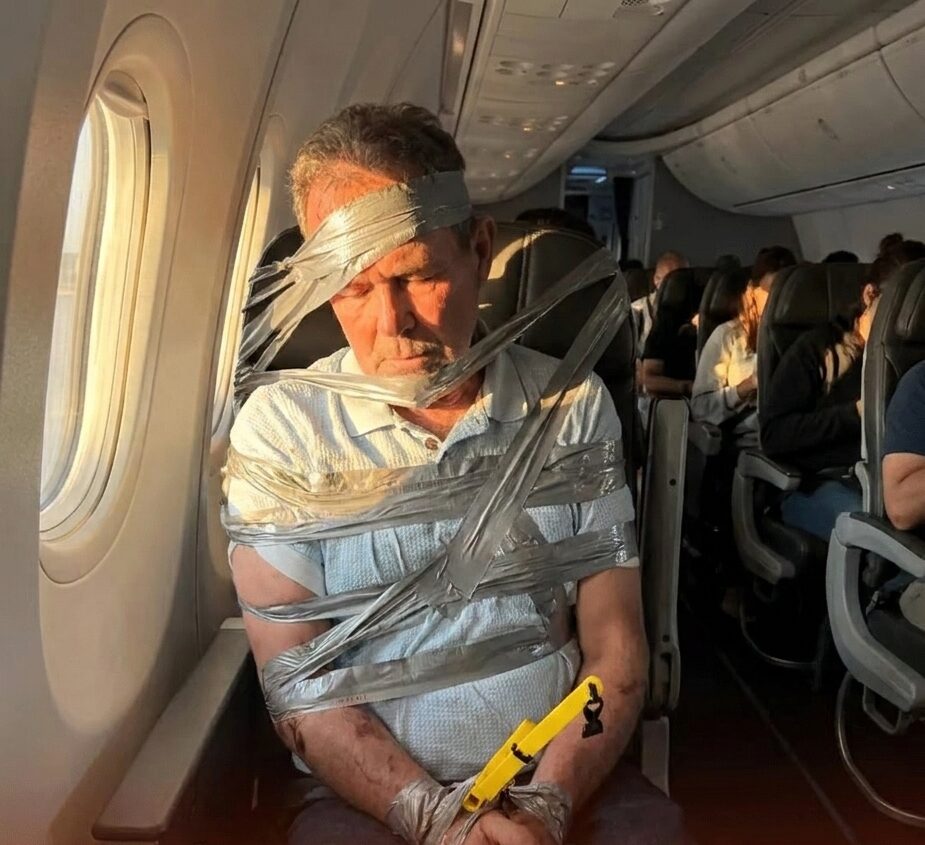
The first-class cabin aboard American Airlines Flight 618 from Dallas to Newark was reportedly calm until the atmosphere changed suddenly. According to fellow passengers, 67-year-old Arthur Lundeen became aggressive, allegedly using racial and homophobic slurs, striking nearby travelers, and resisting efforts to calm him. Retired police officer Juan Mejia said he intervened and was bitten, while passenger Richard Olenick also helped. Flight attendants eventually used restraints, and passengers assisted with zip ties and duct tape as Lundeen continued struggling.
Mejia described the transformation as happening “just like a light switch,” with the cabin quickly turning from quiet to chaos. Olenick said he spent about 15 minutes helping restrain Lundeen while crew members worked to control the situation. The aircraft eventually diverted to Baltimore/Washington International Airport, where law enforcement removed the passenger before the flight continued to Newark. Published reports said Maryland authorities later charged Lundeen with second-degree assault and disorderly conduct. The FBI was reportedly reviewing the incident for possible federal implications.
The situation also created professional consequences. Lundeen had previously been identified as a vice president affiliated with Long Realty in Tucson, but the company later announced that it had ended its relationship with him. Long Realty said the reported conduct was incompatible with its expectations of professionalism, integrity, compassion, and respect, emphasizing that Lundeen was no longer associated with or authorized to represent the company. American Airlines confirmed the diversion was caused by a disruptive customer and said it does not tolerate violence.
For witnesses, the most memorable aspect was how quickly an ordinary flight became a serious disruption. Passengers suddenly found themselves helping crew members restrain someone while the aircraft changed course. The incident resulted in frightened travelers, an emergency diversion, criminal allegations, and immediate professional consequences. Although the allegations remained subject to the legal process, the episode demonstrated how conduct in a confined public setting can rapidly develop into both legal and career-related consequences, leaving lasting effects long after the aircraft reaches the ground.