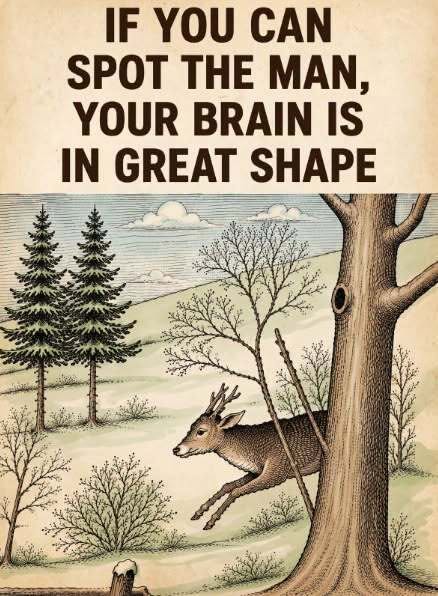
The winter scene appears to show an ordinary snowy forest, with tall trees and a deer standing prominently in the foreground. Because the deer has such a recognizable shape, most viewers naturally focus on it first and may overlook another figure hidden within the surrounding landscape. The challenge is to identify a human face formed by the trees, branches, shadows, and snow rather than shown as a separate portrait.
To find it, viewers need to look beyond the deer and carefully examine the spaces between the tree trunks, the arrangement of branches, and the areas where light and shadow meet. Snow-covered sections may also contribute to the hidden image. The face is blended into the scenery, making it difficult to recognize when the individual shapes are viewed separately.
This type of puzzle works because the human brain naturally organizes visual information into familiar patterns. The deer immediately provides an obvious subject, while the trees, shadows, and snow appear to be unrelated elements. As a result, the brain tends to identify the deer quickly and gives less attention to the subtle arrangement that creates the hidden face.
Once the face is spotted, however, the scene can suddenly appear completely different. Shapes that previously looked random begin to connect, making the hidden image easier to recognize. The puzzle therefore depends more on perception than simple concealment. The deer may be the most noticeable feature, but the real challenge is looking beyond what immediately captures your attention. Can you find the human face among the snowy trees, or did the deer distract you from it?