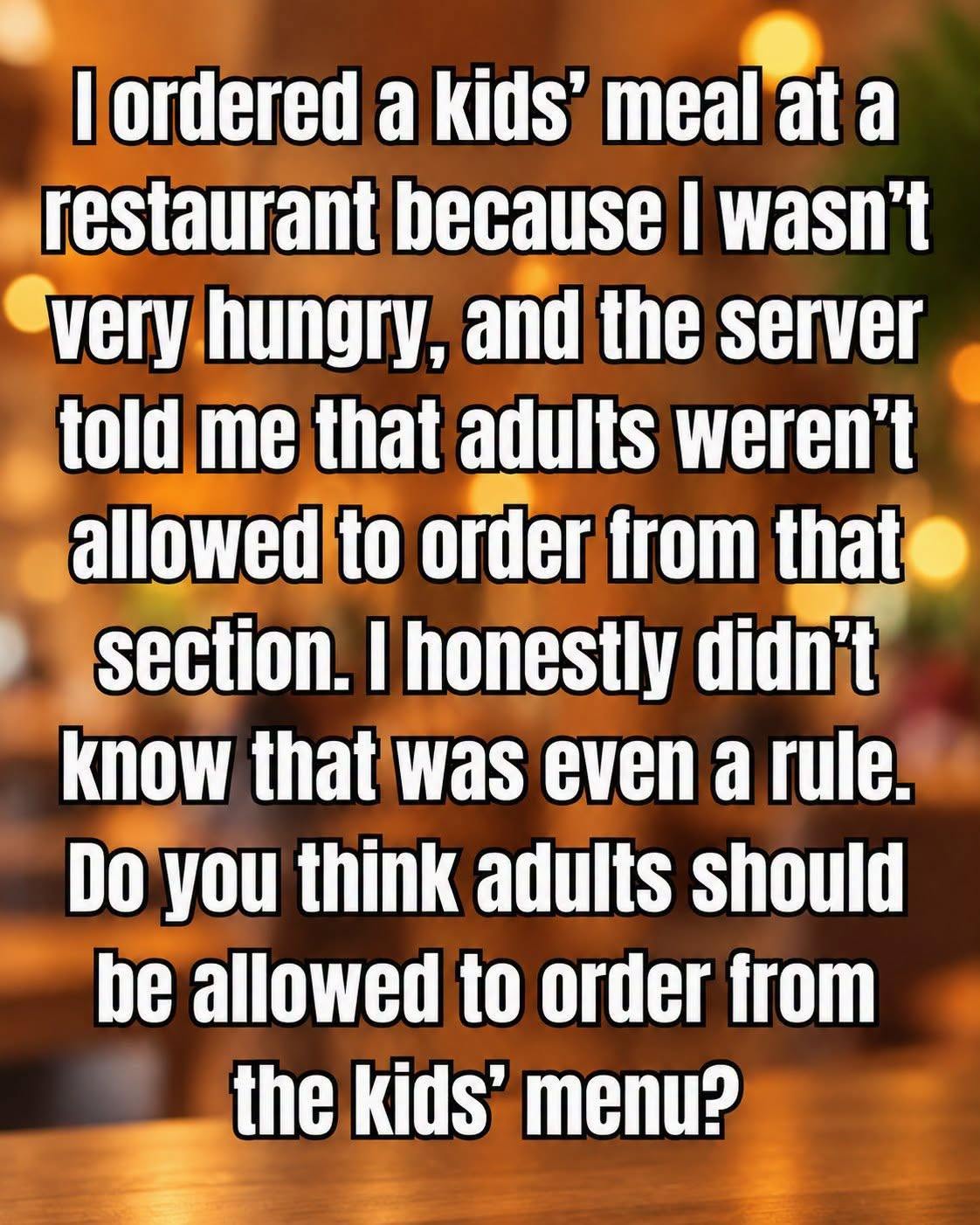
A quiet debate has been developing in restaurants over something that seems simple but can feel surprisingly personal. Some adults are questioned, judged, or even refused service when they order from the kids’ menu instead of selecting a full-sized entrée. What appears to be a basic dining decision can quickly become an uncomfortable experience for customers.
Kids’ meals are usually cheaper and smaller because they are designed for children. However, adults may choose them for practical reasons, including portion size, budget, appetite, or personal comfort. When someone requests a smaller meal and hears that it is available only to children, the response may feel like more than a business policy. It can seem like criticism of how adults should eat or behave in public.
Restaurants also have legitimate concerns. Smaller meals may provide lower profit margins, and businesses depend on carefully planned prices and portions to remain financially sustainable. Still, restaurants could offer alternatives, such as half-sized entrées, smaller portions, or special light-menu choices. These options would provide flexibility without undermining the business model.
Customers, meanwhile, can recognize that restaurants cannot approve every request. Understanding the financial side of food service may help keep expectations reasonable and interactions respectful. Ultimately, the issue is not only about meals. It also involves dignity, choice, and feeling welcome. A balanced approach from both sides can make dining more comfortable, allowing people to order food that suits their needs without unnecessary embarrassment or judgment.