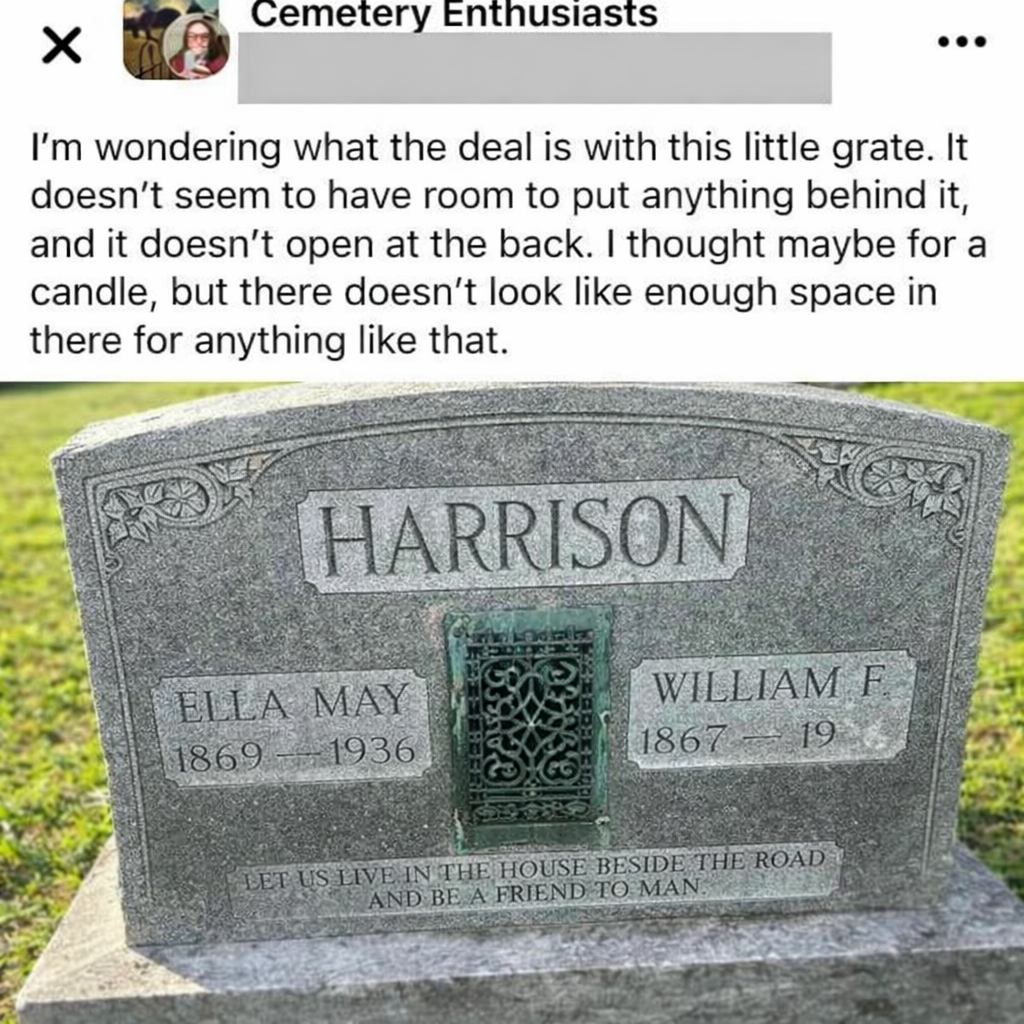
A distinctive cemetery marker featuring a small cast-iron grate presents a meaningful tribute to home and remembrance. While the metal detail may initially appear unusual for a gravestone, it carries thoughtful symbolism. The grate resembles decorative floor vents commonly found in late 19th- and early 20th-century homes, where such features combined practicality with detailed craftsmanship. Its inclusion suggests a deep connection to a beloved household environment, allowing a familiar element of everyday life to become part of a lasting memorial.
The design also echoes the message found in the poem The House by the Side of the Road by Sam Walter Foss, which highlights kindness, openness, and hospitality. The imagery of warmth circulating through a home aligns naturally with the symbolism of a heating grate. Just as air once moved from room to room, the poem reflects the idea of goodwill extending outward to others. Together, the visual element and literary reference create a unified expression of comfort and generosity.
Historically, cast-iron grates were integral parts of early heating systems, especially during a period when central heating technology was still advancing. Many were designed with intricate patterns, showcasing the artistry and skill of metalworkers of the time. Even functional household fixtures were crafted with attention to detail, blending durability with decorative appeal. Over time, these everyday objects have come to represent tradition, stability, and domestic heritage.
When incorporated into a grave marker, the grate takes on deeper meaning beyond decoration. It can symbolize a threshold, representing both memory and the warmth once shared within a home. The design suggests that the influence of a welcoming presence continues to resonate, much like warmth once flowed through iron vents. In this way, the memorial preserves themes of comfort, connection, and enduring belonging.