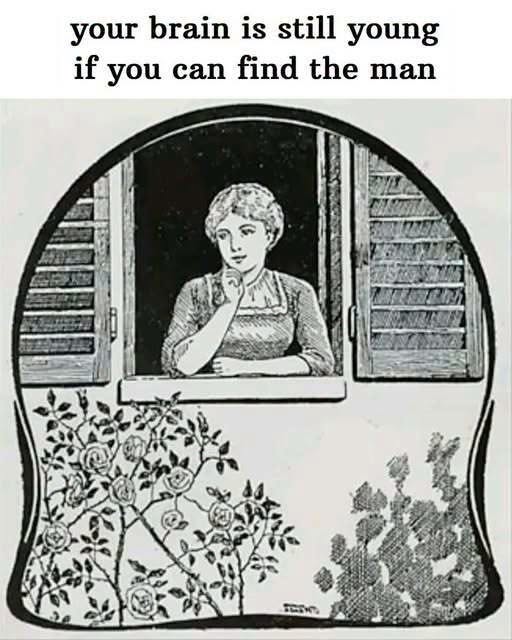
At first glance, this detailed black-and-white illustration appears to show a young woman in an old-fashioned dress standing beside an open window and looking toward a garden. The artwork contains flowers, leaves, branches, shadows, and decorative lines. However, another image is concealed within the composition. A hidden man’s face is formed by combining several elements of the illustration rather than appearing as a clearly drawn figure.
The woman naturally captures attention because she is the most recognizable subject in the picture. This can cause the surrounding details to fade into the background. To find the hidden face, it can help to stop examining individual objects and instead consider larger shapes created by groups of lines. Flowers, window frames, leaves, shadows, and spaces between objects may combine to create facial features when viewed differently.
Changing your viewing distance can also help. If you are looking closely at the screen, try moving farther away and examining the entire image at once. Briefly looking away before returning to the picture may also make previously unnoticed patterns easier to recognize. The puzzle demonstrates how visual perception often organizes complex images according to the objects people recognize first, allowing alternative shapes to remain hidden.
Once the intended arrangement becomes visible, details that previously looked like ordinary decorative elements may suddenly appear connected. Claims that finding the hidden man can reveal a person’s age or abilities should be treated as part of the puzzle rather than established facts. The real challenge is simply visual observation. Look across the entire illustration, including the window, garden, flowers, leaves, shadows, and spaces between objects, and see whether the hidden face emerges.