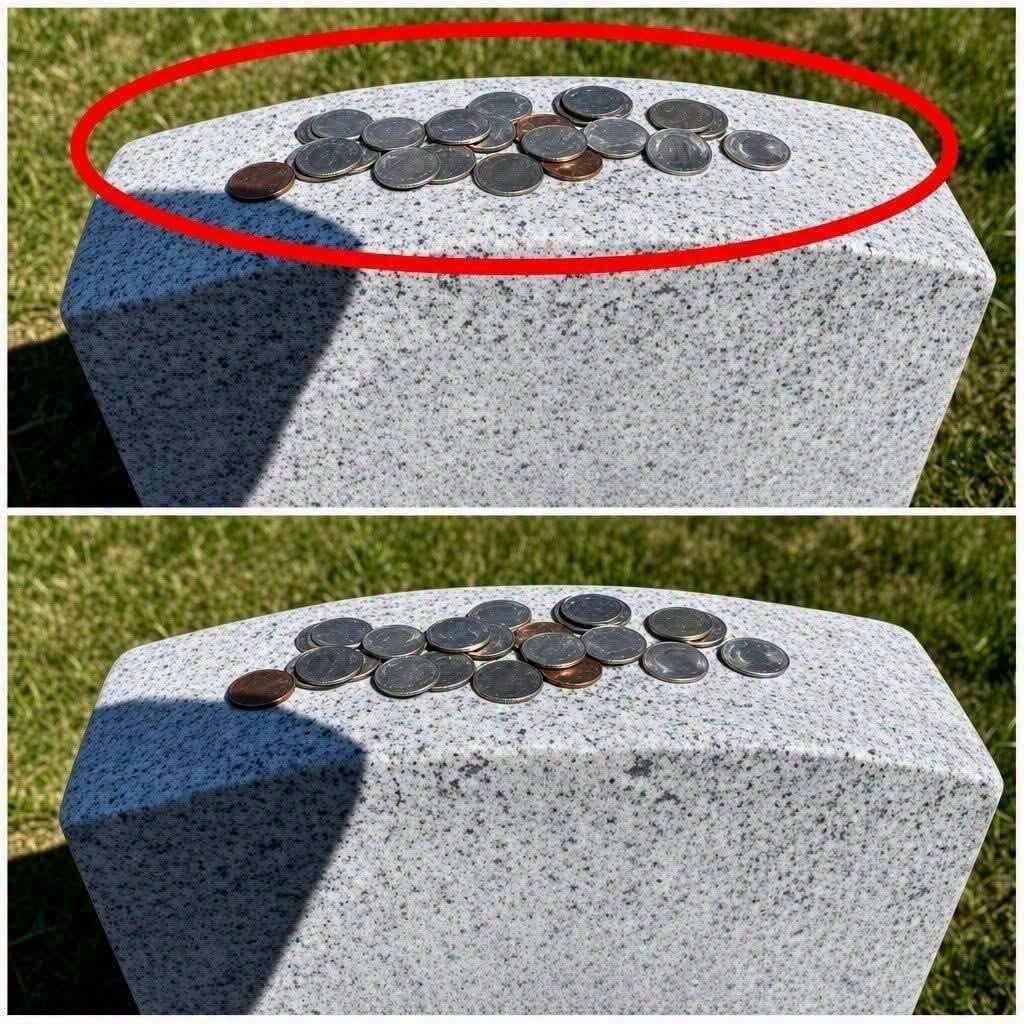
Visitors to military cemeteries may occasionally notice coins resting on the headstones of fallen service members. Although these small objects might appear ordinary, they can represent meaningful gestures of remembrance and respect. For families visiting the graves of loved ones, discovering a coin may provide reassurance that others continue to honor their memory.
According to a commonly shared interpretation of this tradition, each coin denomination carries a particular meaning. A penny indicates that someone visited to pay their respects. A nickel is said to represent a visitor who attended military boot camp with the deceased, while a dime suggests that the two served together during their military careers.
A quarter is traditionally associated with someone who was present when the service member died. However, these interpretations are not universally followed, and historical accounts of the custom’s origins differ. The meaning of an individual coin may therefore depend on the visitor’s intentions and the traditions observed by a particular community.
Regardless of denomination, leaving a coin can be a quiet expression of appreciation, friendship, and remembrance. The gesture requires no formal ceremony or spoken tribute, yet it can hold considerable personal significance. For surviving relatives and fellow service members, these small offerings serve as reminders that meaningful connections and memories can endure across generations.