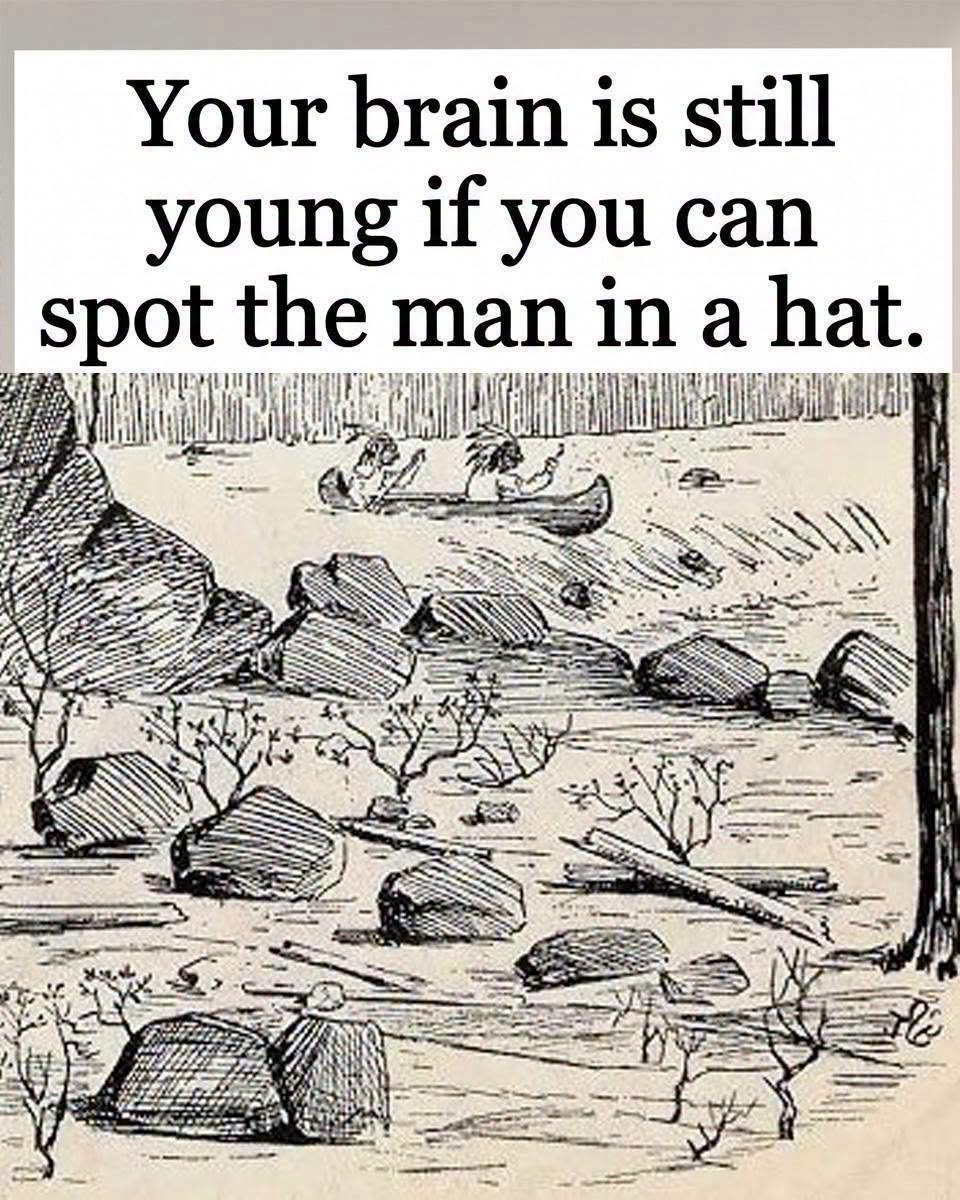
At first glance, this vintage illustration depicts a peaceful landscape featuring large rocks, fallen logs, tall trees, and a quiet lake. Two people travel across the water in a small canoe. However, hidden within the scenery is the face of a man wearing a hat, cleverly disguised among the natural shapes.
Finding the hidden face requires careful observation because its features blend into the surrounding rocks, shadows, and curved lines. The brain initially recognizes familiar objects such as trees and water, making the concealed image less noticeable. This effect relates to pareidolia, the tendency to recognize familiar patterns, including faces, in ambiguous visual arrangements.
To solve the puzzle, examine the entire illustration rather than focusing exclusively on individual objects. Try viewing the image from a greater distance or gently narrowing your eyes to reduce distracting details. Pay attention to spaces between rocks and other landscape elements, as these may help form the hidden man’s facial features and hat.
Although some optical puzzles claim to reveal intelligence or brain age, this illustration is not a scientifically validated assessment. Instead, it provides an entertaining opportunity to explore visual perception, concentration, and pattern recognition. Whether you identify the face immediately or need several attempts, the challenge demonstrates how changing your perspective can reveal details that initially go unnoticed.