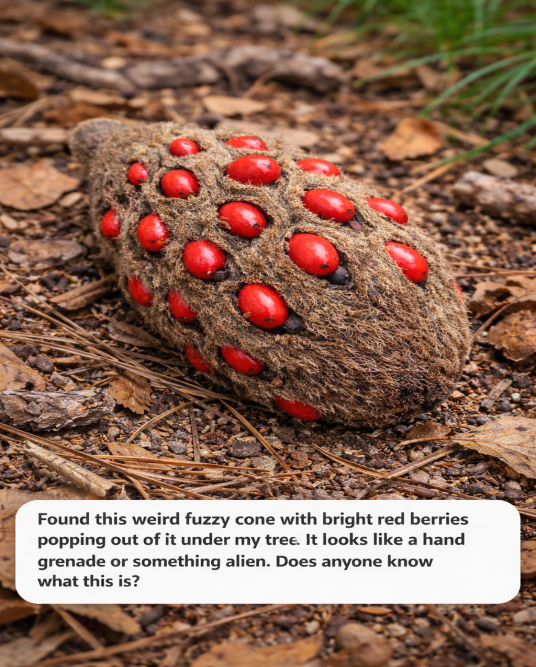
Discovering an unusual object in your garden can naturally spark curiosity, especially when it appears as a fuzzy, cone-shaped pod with bright red seeds inside. While it may initially look artificial or unfamiliar, this object is entirely natural. It is the seed pod of a magnolia tree, which is commonly found in many regions, particularly in the southeastern United States.
Magnolia seed pods develop after the tree’s large, fragrant flowers complete their blooming cycle. The pod starts as a small green structure and gradually matures throughout the summer. By early fall, it becomes brown and woody, eventually opening to reveal vibrant red seeds. These seeds are coated in a fleshy outer layer that attracts birds and wildlife, which help disperse them and support the tree’s natural reproduction process.
Magnolia trees are recognized for their glossy green leaves and striking blossoms. Various species produce these distinctive pods, including both evergreen and deciduous varieties. Before fully maturing, the pods often have a soft, slightly fuzzy texture, making them easier to identify beneath the tree’s branches.
Although magnolia seeds are not intended for human consumption and may cause mild digestive discomfort if eaten, they are not considered highly toxic. Their primary role is ecological, serving as a food source for birds and small animals. If you find these pods in your yard, you may allow them to decompose naturally or incorporate them into seasonal decorations, as they represent an interesting and important stage in the magnolia tree’s life cycle.