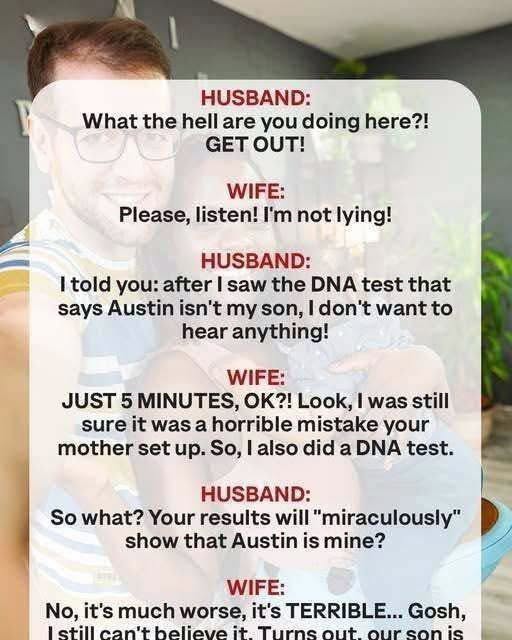
When our son was born, insecurity led me to request a paternity test. My wife calmly asked what would happen if the child wasn’t mine. I replied that I would divorce her and refuse to raise another man’s child. Weeks later, the results indicated I wasn’t the father. Devastated, I filed for divorce, left our home, and cut contact with both of them.
For three years, I lived with anger and resentment. Then I unexpectedly met one of my ex-wife’s friends, who revealed something heartbreaking. After our separation, my wife had questioned the clinic’s findings. An investigation discovered that laboratory samples had been mislabeled. The original result was incorrect, and the boy was my biological son.
By then, my former wife had moved away, and my son barely remembered me. My attempts to contact her went unanswered. Looking through photographs of his earliest moments, I realized how much I had missed. Three years of childhood memories could never be recovered, regardless of the laboratory’s mistake.
I eventually understood that my greatest mistake wasn’t requesting the test, but treating its result as unquestionable proof of betrayal. Instead of seeking clarification, I allowed anger and pride to determine my actions. Although the laboratory had provided incorrect information, I remained responsible for my decisions. Rebuilding anything would require acknowledging the pain I caused, accepting responsibility, and understanding that some lost moments cannot be restored.