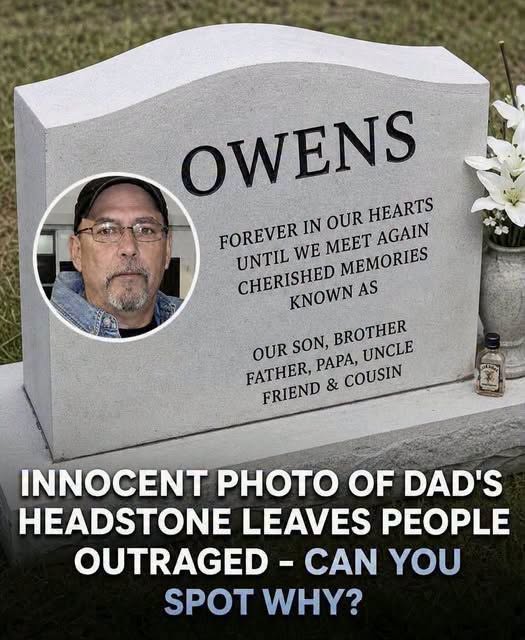
A family’s decision to honor a loved one with an unconventional gravestone inscription led to an unexpected disagreement. Although the memorial initially appeared traditional, the first letters of its words formed a concealed message reflecting the deceased man’s distinctive sense of humor. What began as a personal tribute eventually attracted attention from others.
For his relatives, the hidden wording represented an affectionate memory rather than an attempt to offend anyone. The message referenced a familiar private joke that reminded them of his personality and the laughter they had shared. They believed the inscription offered a meaningful way to preserve his individuality beyond conventional expressions of remembrance.
However, cemetery representatives viewed the situation from a different perspective. As caretakers of a shared memorial space, they had to consider established inscription guidelines and the expectations of other grieving families. While personal tributes can provide comfort, cemetery policies also aim to maintain an atmosphere of dignity and respect for everyone visiting.
The disagreement raised broader questions about individuality and tradition in places of remembrance. Families may wish to celebrate loved ones through personal expressions, while cemetery administrators must consider the wider community. Although the account provides no final resolution, it illustrates how a meaningful family tribute can create differing interpretations of what constitutes respectful remembrance.