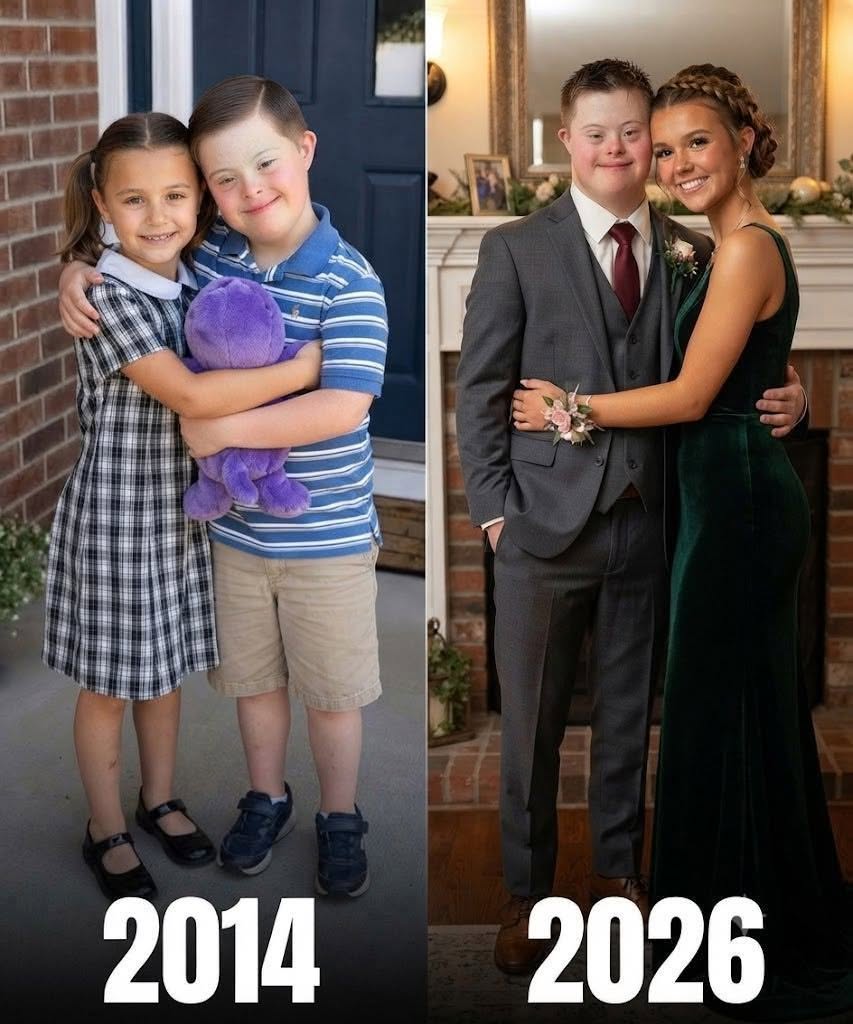
On prom night, my mother unexpectedly locked my bedroom door while Noah waited downstairs. Before allowing me to leave, she wanted to reveal something important about our friendship.
Noah and I had been inseparable since first grade, bonding over our dislike of raisins. Although he had Down syndrome, his humor and kindness defined our relationship.
Throughout childhood, Noah supported me through difficult experiences, particularly my parents’ divorce. Whenever I struggled with loneliness, schoolwork, or artistic confidence, he remained consistently beside me without judgment.
My mother explained that Noah had noticed my sadness during the divorce. Unable to solve every problem, he believed that simply staying close could make a meaningful difference.
She admitted asking Noah to always protect me, but eventually understood their friendship involved mutual support. Neither person carried an obligation to care for the other alone.
When we returned downstairs, Noah greeted me with his familiar smile. Nothing about our relationship had changed, although my understanding of his quiet loyalty had grown considerably.
At prom, we danced awkwardly, laughed together, and honored a childhood promise. The evening needed no extraordinary events because our shared happiness already made the celebration deeply meaningful.
My mother finally recognized that our connection was never based on responsibility or obligation. It reflected two lifelong friends continually choosing kindness, companionship, and unwavering support for each other.