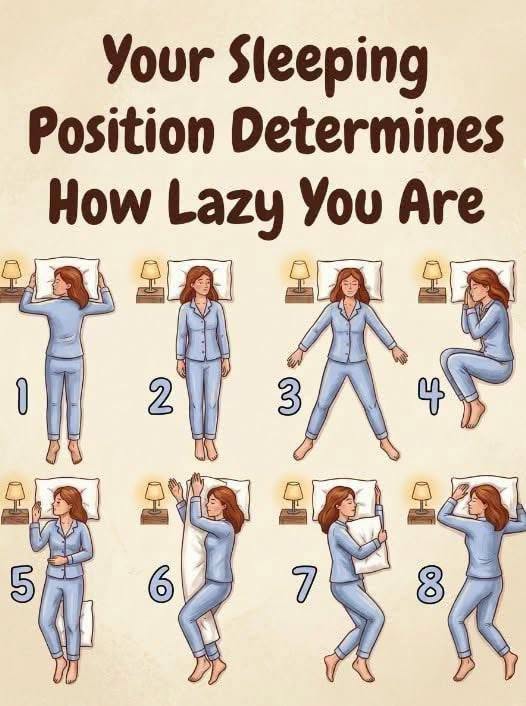
Many people regularly sleep in familiar positions, including lying on their backs, curling sideways, stretching outward, or hugging pillows. Online discussions sometimes associate these habits with personality traits.
However, scientific evidence does not reliably connect sleeping posture with confidence, generosity, sensitivity, shyness, or laziness. Such interpretations are better considered entertainment rather than established psychological conclusions about individuals.
Sleeping preferences usually reflect physical comfort, established habits, and environmental conditions. Mattress firmness, pillow height, room temperature, shoulder discomfort, and back support can influence preferred resting positions significantly.
Eight commonly illustrated positions include raised arms, straight arms, starfish stretching, fetal curling, crossed arms, hands near pillows, pillow hugging, and bent arms positioned near the head.
Back sleeping distributes weight but may worsen snoring or breathing difficulties. Side sleeping sometimes improves breathing, while tightly curled positions can contribute to stiffness and discomfort during rest.
Pillow hugging may support shoulders, whereas raised arms can aggravate existing shoulder problems. Warm temperatures encourage stretching, while cooler conditions often make curling beneath blankets more comfortable.
Sleeping posture cannot accurately measure motivation, productivity, discipline, or personal character. Researchers instead examine sleep duration, nighttime awakenings, breathing patterns, and daytime alertness when evaluating sleep quality.
Choose positions supporting comfortable spinal alignment, using pillows between or beneath knees when helpful. Persistent numbness, discomfort, breathing pauses, or exhaustion warrant medical advice. Prioritize restorative sleep over labels.