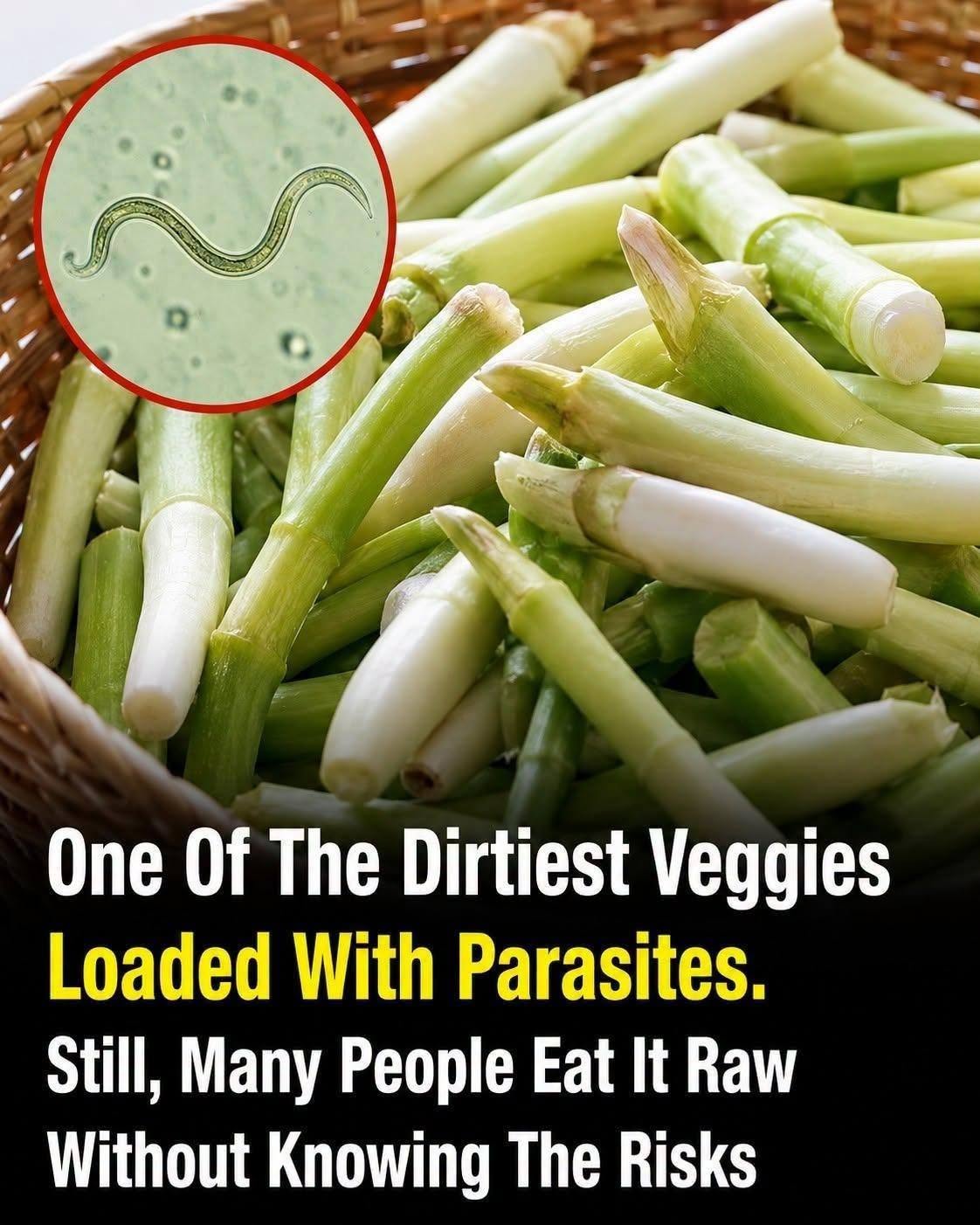
Green onions, also known as scallions, provide fresh flavor and valuable nutrients, including vitamins K and C, folate, and fiber. However, improper handling can introduce health risks.
Because green onions grow in soil, they may encounter contaminated water, animal waste, or unclean farming equipment. Their layered structure can also trap dirt and potentially harmful bacteria.
Bacteria such as Salmonella and E. coli can sometimes contaminate fresh produce. Since green onions are frequently consumed raw, inadequate washing and handling may increase foodborne illness risks.
Possible symptoms include nausea, stomach cramps, and digestive discomfort. Children, older adults, pregnant women, and individuals with weakened immune systems may face greater complications from contaminated food.
Fortunately, avoiding green onions entirely is unnecessary. Proper preparation begins with removing damaged outer layers, trimming roots, and thoroughly rinsing stalks under clean, running water before eating.
Pay particular attention to the base, where soil frequently collects. Gently rubbing the stalks while washing helps remove debris, although rinsing cannot eliminate every possible harmful microorganism.
Prevent cross contamination by separating raw meat from fresh vegetables. Thoroughly clean cutting boards, utensils, and preparation surfaces, and wash your hands before and after handling food.
Refrigerate green onions promptly and regularly examine their condition. Discard any that develop sliminess, discoloration, or unusual odors. Careful hygiene and storage help reduce unnecessary food safety risks.