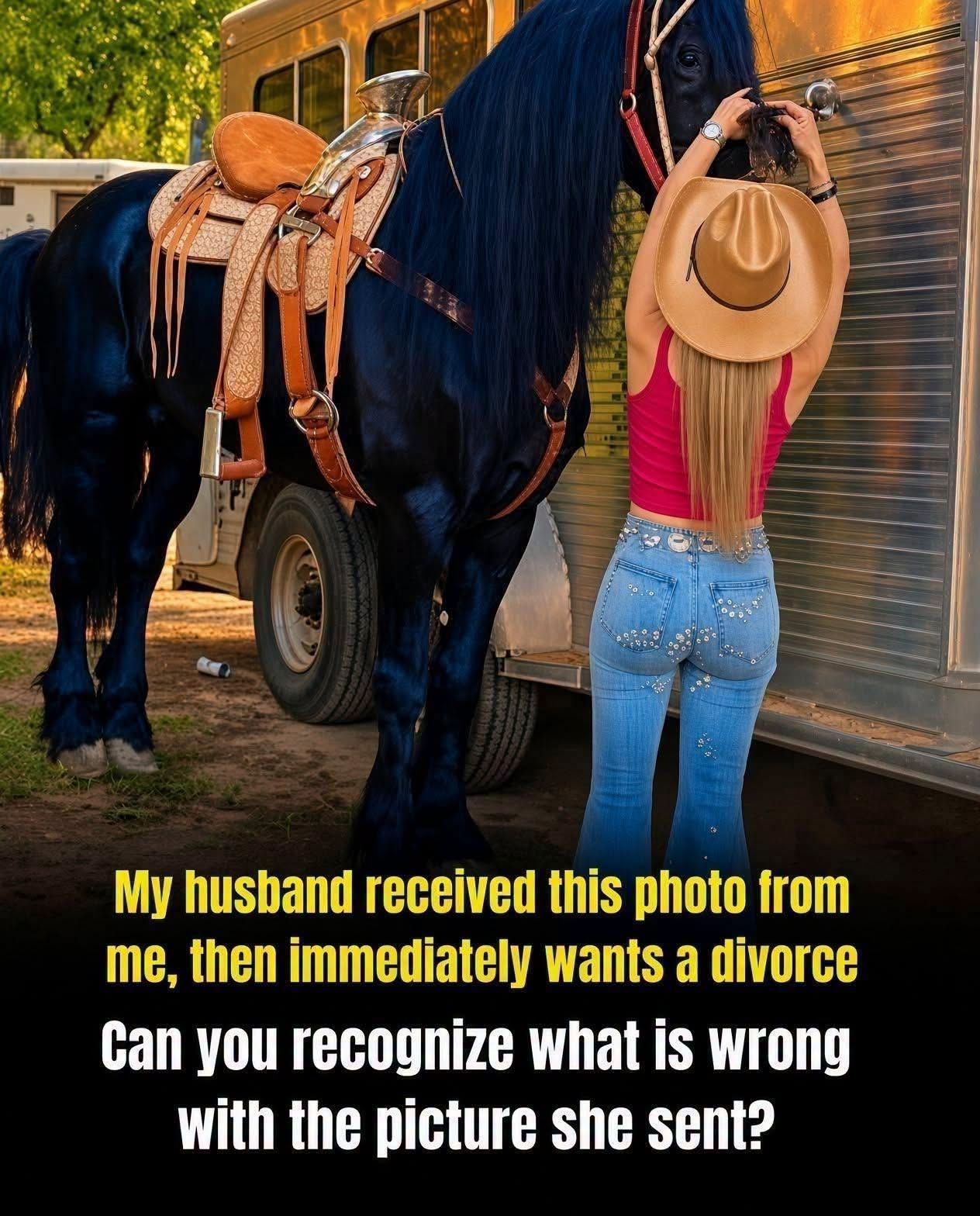
During a pleasant afternoon at the stables, a woman approached a magnificent black horse. Its elegant appearance and glossy coat reflected the soft natural sunlight.
As she gently reached toward its face, someone photographed their peaceful interaction. The resulting image captured a beautiful moment between a person and an animal.
Initially, nothing appeared unusual. However, careful observers noticed a curious shape near the woman’s waist, where the horse’s dark body seemed to overlap her silhouette.
The horse’s neck, mane, and body combined with surrounding shadows, creating an unexpected outline. Some viewers interpreted this arrangement as a separate object within the photograph.
This visual effect demonstrates pareidolia, a phenomenon where our brains recognize familiar patterns within ambiguous shapes, much like seeing animals in clouds or wooden textures.
To understand the illusion, examine the horse’s outline carefully. Notice how its mane, body, the woman’s clothing, and background shadows blend together through perspective and lighting.
Different viewing angles and individual attention can influence what people notice first. Natural light and overlapping dark surfaces make certain shapes harder to distinguish immediately.
Ultimately, this ordinary stable photograph becomes an entertaining visual puzzle. Its unusual appearance requires no complicated trick, only natural positioning, shadows, perspective, and human visual interpretation.