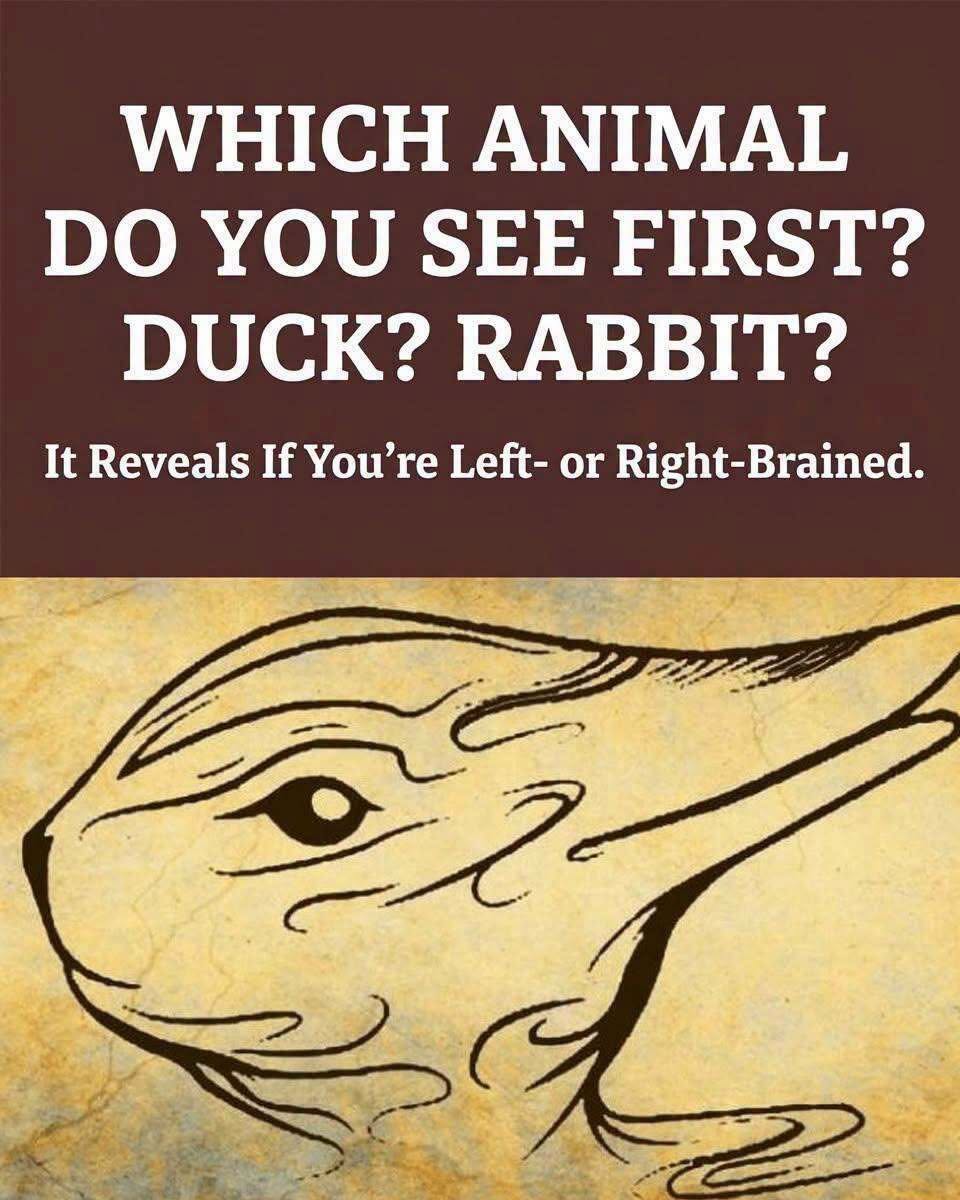
A familiar black-and-white drawing creates an intriguing visual experience. Some viewers immediately recognize a rabbit, while others notice a duck within the very same lines.
The rabbit’s long ears can also resemble the duck’s bill. Neither interpretation requires changing the picture, demonstrating how identical shapes can suggest completely different familiar animals.
This classic optical illusion reveals how the brain organizes visual information. Previous experiences, familiar patterns, expectations, and attention influence what people recognize when examining an ambiguous image.
Popular interpretations associate noticing the rabbit first with imagination, creativity, curiosity, and quick recognition. However, these entertaining descriptions do not establish scientifically proven personality characteristics or abilities.
Seeing the duck first is sometimes linked with analytical thinking, observation, and attention to detail. Nevertheless, this response cannot reliably measure intelligence, practicality, or logical reasoning skills.
The illusion becomes especially interesting when viewers discover the second animal. Their perception can shift between interpretations even though every line of the original drawing remains unchanged.
Psychologists examine such experiences to understand perceptual flexibility. The brain can alternate between possible interpretations, showing how attention and familiarity shape our understanding of identical visual information.
Ultimately, this drawing is not a reliable personality test. Its fascination lies in demonstrating different perspectives. Look again, identify both animals, and observe how your perception changes.