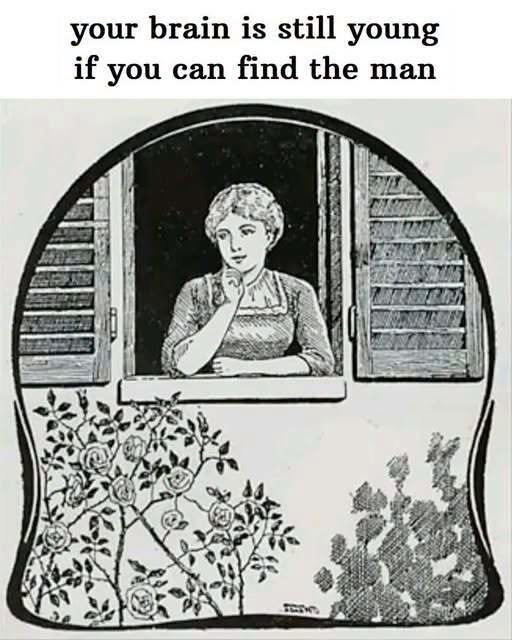
At first glance, this detailed black and white illustration shows a young woman standing beside an open window, surrounded by flowers, leaves, branches, and decorative patterns.
However, another image is cleverly concealed within the artwork. A man’s face emerges through overlapping shapes, shadows, window details, and floral arrangements rather than appearing as a separate figure.
The woman naturally attracts attention because of her prominent position and recognizable appearance. This visual emphasis makes surrounding details easier to overlook, allowing the hidden image to remain unnoticed.
Finding the face requires examining larger patterns instead of individual objects. Flower outlines, branches, empty spaces, and shadows may combine into recognizable facial features when viewed together from another perspective.
Changing your viewing distance can help reveal the illusion. Moving farther from the screen, briefly looking away, or examining the entire composition may make previously unnoticed shapes clearer.
This puzzle demonstrates how human perception prioritizes familiar objects. Once viewers recognize one interpretation, their attention may overlook alternative arrangements created by the same collection of lines.
Although some versions associate discovering the hidden face with age or intelligence, these claims lack established scientific support. The illustration is primarily an entertaining exercise in visual perception.
Look again at the window, garden, flowers, and surrounding shadows. Rather than searching for an obvious person, examine how separate details connect to reveal an unexpected image.