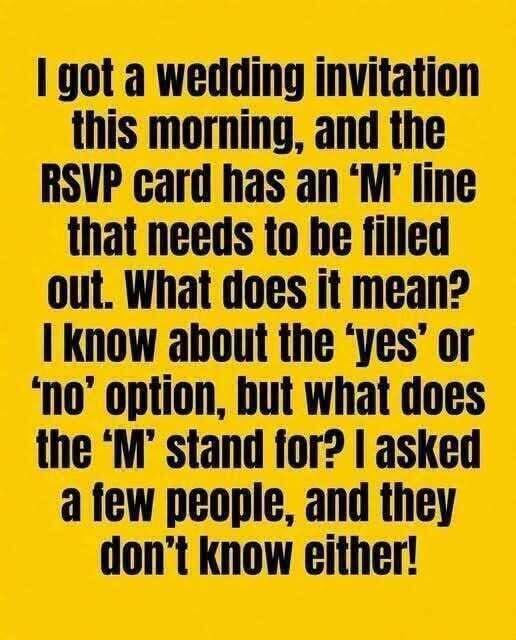
The letter “M” on traditional RSVP cards often confuses unfamiliar guests, although it simply represents the beginning of a courtesy title placed before the responding guest’s name.
Guests traditionally complete it with Mr., Mrs., Ms., or Miss, followed by their names. This format reflects older formal invitation etiquette, maintaining elegance while accommodating preferred titles.
Modern invitations offer greater flexibility, allowing guests to provide their preferred titles or simply their names. Identifying respondents remains the primary purpose, rather than requiring specific formalities.
The letter should not be confused with attendance confirmation, guest numbers, meal selections, or dietary requirements. These separately labeled sections request different information and deserve careful attention.
Hosts designing invitations can replace traditional formatting with “Name” or “Guest Name.” Formal weddings may retain classic styles, while casual celebrations benefit from simpler, more welcoming wording.
Guests should follow instructions, identify invited attendees, confirm attendance, and answer additional questions. Extra guests should only be included when the host has specifically permitted their attendance.
Accurate responses and timely returns help hosts coordinate seating, catering, and other arrangements. Clear invitation wording also reduces confusion, incomplete responses, and incorrectly completed cards during planning.
Traditional and modern formats remain equally acceptable, depending on event style, host preferences, and guest expectations. Understanding this custom demonstrates how historical etiquette continues influencing contemporary celebrations.