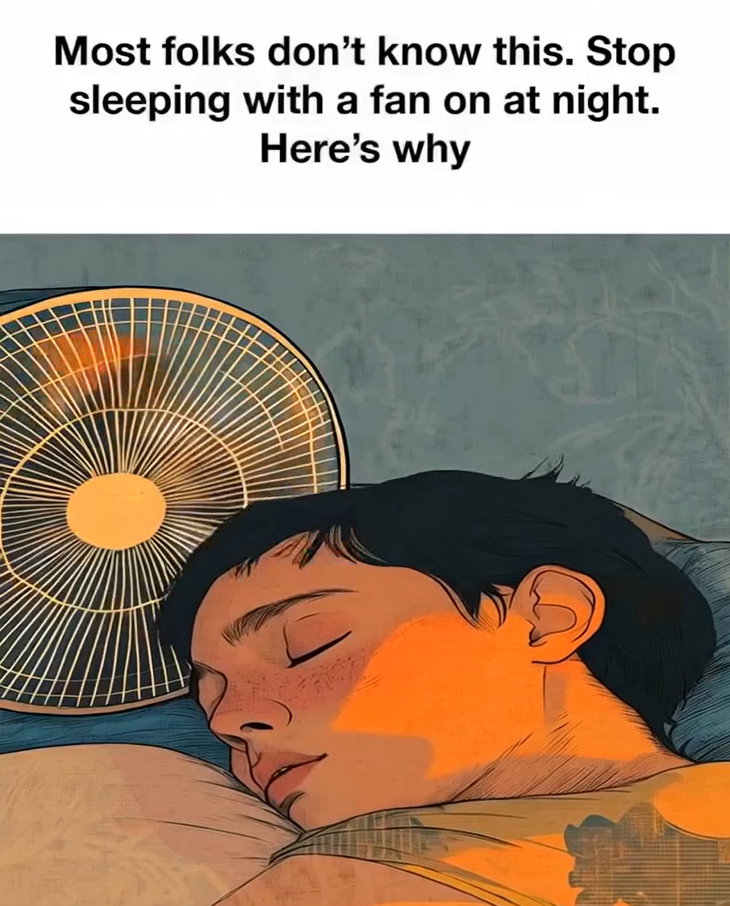
Sleeping with a fan on at night is a common practice, especially during warmer months, as the gentle airflow can enhance comfort and promote better rest. However, there are several important factors to consider for your overall health and well-being. Fans can reduce humidity in the air, which may lead to dry skin, throat irritation, and dryness in the eyes. Over time, this lack of moisture can make mornings less comfortable and affect how refreshed you feel upon waking.
Another issue is that fans circulate dust, pollen, and other small particles throughout the room. Even for those without typical allergy symptoms, this can trigger discomfort or worsen respiratory conditions. Direct airflow toward the face or body may also contribute to sinus irritation. The combination of cool, dry air and steady circulation can dry out nasal passages, potentially causing congestion, headaches, or interrupted sleep.
Constant airflow focused on one area of the body can sometimes lead to mild muscle stiffness or soreness. While fans provide instant relief and cooling, it’s important to find a balance between comfort and health. Adjusting the direction or speed of the fan, or pairing it with a humidifier, can help reduce dryness and maintain a healthier sleeping environment.
By being aware of these effects, you can create a bedroom setup that supports both comfort and well-being. With small adjustments, it’s possible to enjoy the cooling benefits of a fan while safeguarding your respiratory system, skin, and overall sleep quality.