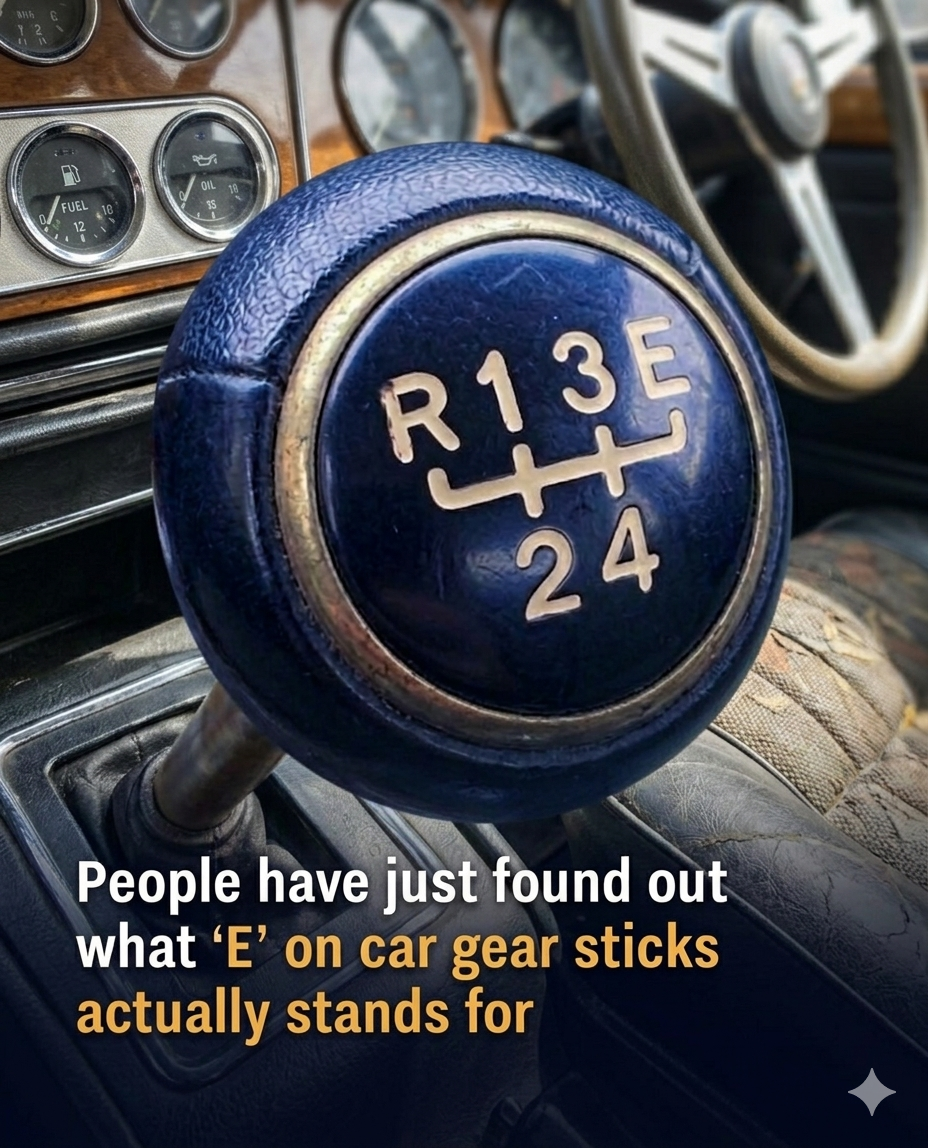
For many years, drivers have relied on the familiar letters and numbers on gear shifters to guide how a vehicle moves, stops, and reverses. Manual transmissions typically display numbered gears along with “R” for reverse, while automatic vehicles include “P,” “R,” “N,” and “D,” sometimes adding “L” for low gear. However, some older vehicles also featured an “E,” a marking that is less familiar to many modern drivers and often raises questions about its purpose.
The “E” stood for “Economy,” a setting designed to support more efficient driving. When selected, it adjusted how the transmission shifted, encouraging earlier gear changes and keeping engine speeds lower. This resulted in smoother acceleration and reduced fuel consumption. In some vehicles, it also moderated throttle response, helping drivers avoid rapid acceleration. During periods when fuel efficiency was a major concern, this feature gave drivers more control over how their vehicle used energy.
As automotive technology advanced, this feature became less necessary. Modern vehicles are equipped with advanced systems, including fuel injection, sensors, and onboard computers that automatically optimize performance and efficiency. Improvements in transmission design and overall vehicle engineering have reduced the need for a separate economy setting. Today, similar functions may still exist but are often integrated into digital controls or activated through buttons rather than a gear position.
The presence of the “E” on older gear shifters reflects how driving has evolved over time. It represents a period when drivers had more direct mechanical control over efficiency settings. While newer vehicles rely on automated systems, this feature remains a reminder of how earlier designs balanced performance and fuel economy, connecting past driving practices with modern innovations.