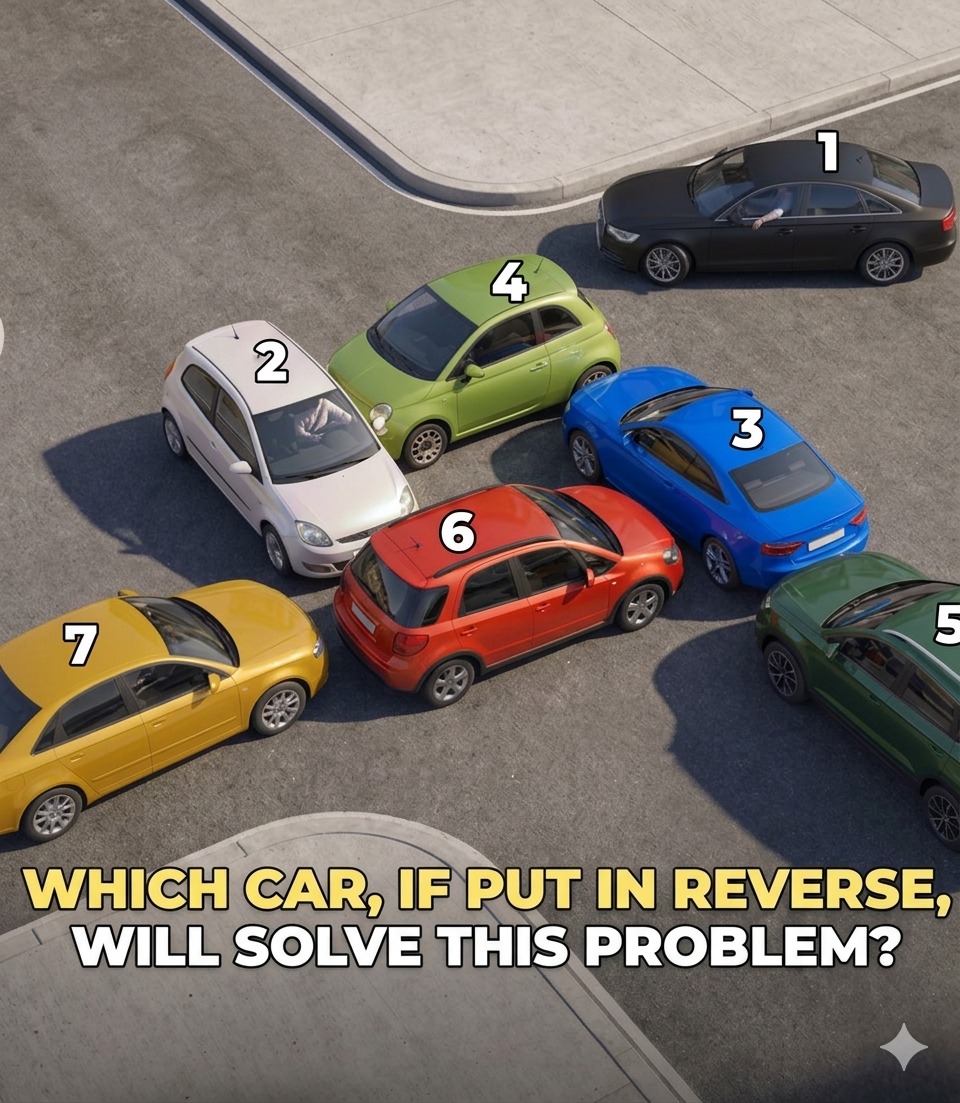
Traffic puzzles like the familiar “blocked car” challenge show how simple-looking problems can hide deeper complexity. At first glance, the grid appears manageable, with only a few vehicles and limited movement. The real challenge, however, is not identifying what seems stuck, but recognizing what can still move. In this scenario, the key lies with Car 4—the blue car—whose limited flexibility becomes essential to unlocking the puzzle.
A practical strategy is to focus on the smallest available opening rather than the most crowded area. Car 4 can shift slightly backward, creating a subtle but important change in the layout. While other vehicles like Cars 3, 5, and 6 may appear more significant because they are heavily blocked, they cannot create useful space at the start. Car 4 stands out because it provides the only effective first move.
Once Car 4 is repositioned, the structure of the puzzle begins to open up. This small adjustment creates space for Cars 2 and 6, which influence more of the grid. As these cars move, additional openings appear, and the puzzle gradually becomes easier to solve. The process works as a sequence, where each correct move leads naturally to the next step.
What makes this puzzle engaging is the lesson it offers. People often focus on the most obvious obstacles instead of noticing smaller opportunities that can lead to progress. Car 4 may seem minor at first, yet it provides the crucial starting point. This reflects effective problem-solving: identifying subtle possibilities, using them thoughtfully, and allowing solutions to develop step by step.