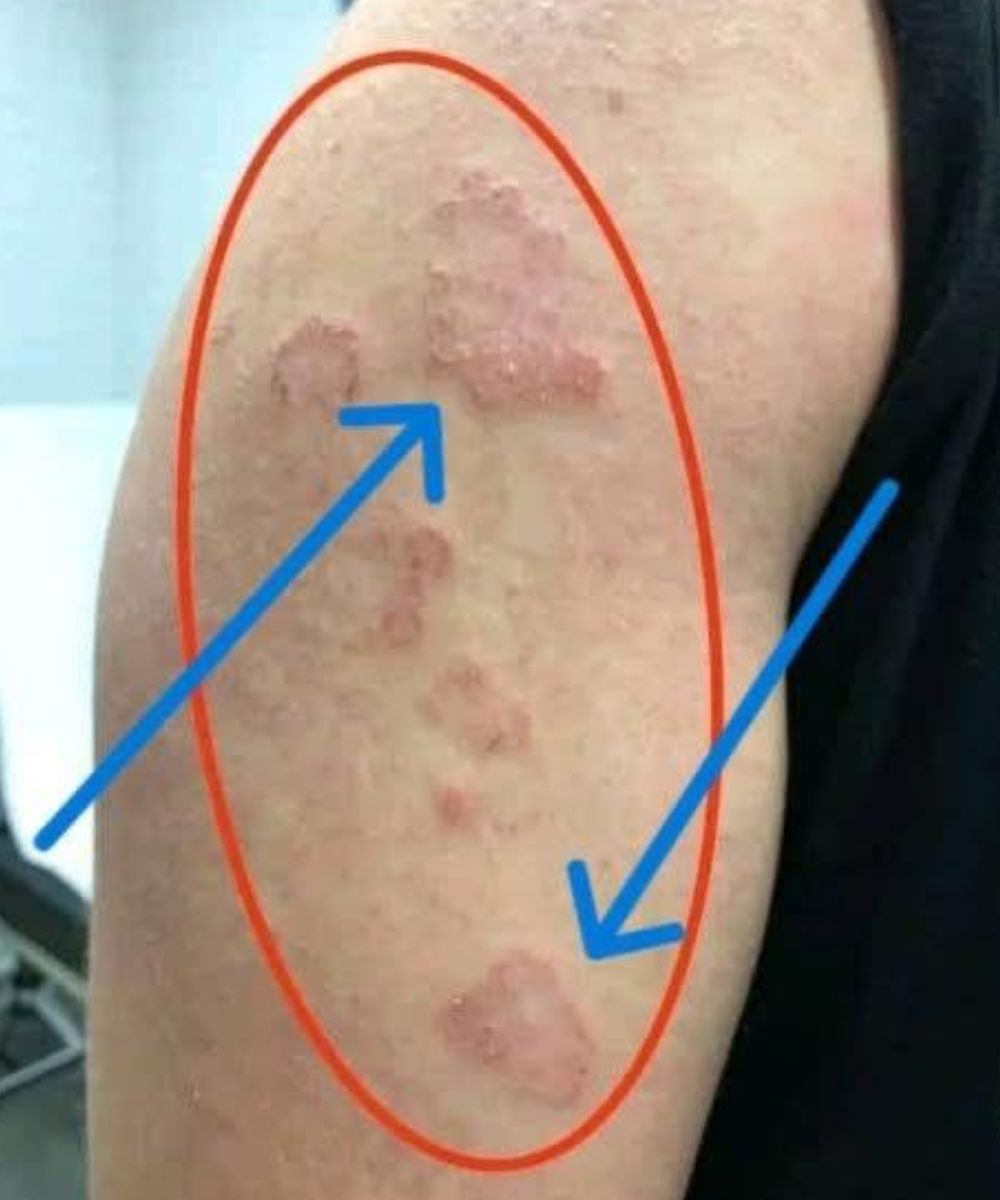
Noticing a red, circular patch on your skin can be concerning, especially if it changes in size or appearance over time. A common question is whether it may be contagious, and the answer depends on the underlying cause. One possible explanation is ringworm, a fungal condition that often appears as an itchy, round rash with a slightly raised border and a clearer center. It can spread through direct skin contact, shared personal items, contaminated surfaces, or contact with animals, which makes early awareness important.
However, not all circular rashes are caused by infections. Non-contagious conditions such as eczema—particularly nummular eczema—and psoriasis can present with similar appearances. Eczema often shows up as dry, coin-shaped patches linked to skin irritation and barrier issues, while psoriasis typically causes thicker, scaly areas associated with immune system activity. Although these conditions may look similar, they are not spread from person to person.
Distinguishing between these conditions based on appearance alone can be challenging, but certain patterns may help. Ringworm often expands outward in a defined circular shape, while eczema tends to feel dry and may crack or form crusts. Psoriasis usually creates thicker patches and may also appear on areas such as the elbows or knees. In some cases, if a rash worsens after using certain topical treatments, it may indicate that a fungal cause should be considered.
If the affected area continues to grow, becomes uncomfortable, or causes persistent itching, seeking guidance from a healthcare professional is recommended. A proper evaluation can help identify the cause and guide appropriate care. Keeping the skin clean, avoiding shared personal items, and following recommended treatments can support recovery and help prevent further spread or irritation.