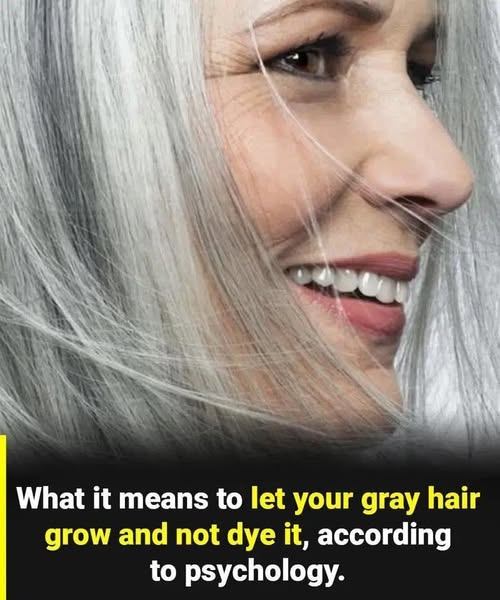
Leaving gray hair visible instead of covering it with dye has become more common, and many experts link this shift to changing perspectives on identity and emotional maturity. In the past, gray hair was often viewed as a sign of aging tied to reduced relevance, especially in cultures that placed strong value on youth. These views created pressure to hide natural changes in appearance. Today, that perspective is evolving, with gray hair increasingly seen as a reflection of confidence, authenticity, and a more balanced understanding of beauty and self-worth.
From a psychological standpoint, choosing to stop dyeing hair can represent a meaningful internal shift. Hair is closely connected to personal identity and how individuals present themselves to others. For some, concerns about gray hair are less about appearance and more about fear of judgment or changing social perceptions. Allowing natural hair color to show can reflect a shift toward self-acceptance, where personal value is no longer tied to external expectations but instead grounded in self-awareness.
Experts often describe this decision as a form of self-affirmation. By stepping away from long-standing beauty norms, individuals may feel a greater sense of autonomy and emotional resilience. The choice reflects a move toward authenticity, where personal comfort and honesty take priority over maintaining a specific image. Rather than indicating neglect, it can represent a thoughtful decision to embrace change with confidence.
This perspective is especially significant for women, who have historically experienced stronger expectations around appearance and aging. Choosing to embrace gray hair can feel like a way to challenge those expectations and reduce the pressure of constant upkeep. At the same time, men are also encountering increasing expectations related to appearance. For both, embracing natural changes can support a healthier relationship with aging—one that values confidence, self-respect, and long-term well-being.