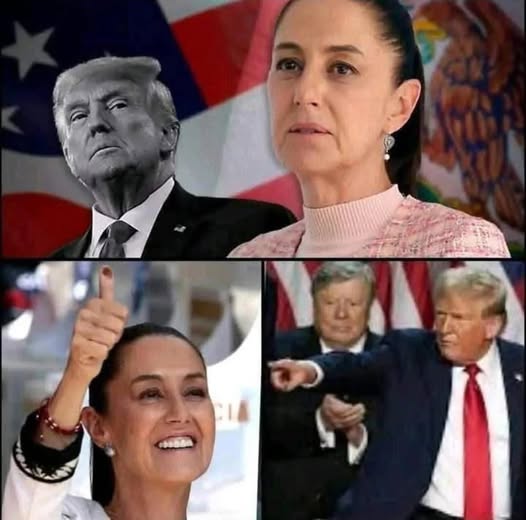
A significant change in U.S. policy has contributed to increased tensions with Mexico after former President Donald Trump moved to classify certain Mexican criminal organizations under a foreign terrorist designation framework. This change modifies the legal approach, allowing broader financial sanctions, expanded monitoring authority, and stricter penalties for individuals or entities linked to those groups. As a result, an issue traditionally handled as cross-border crime is increasingly being treated through a national security lens.
On the Mexican side, President Claudia Sheinbaum has responded by strongly emphasizing national sovereignty. Her administration has stated that cooperation with the United States must not compromise Mexico’s control over its own territory. At the same time, Mexican officials have raised concerns about the continued flow of illegal firearms from the United States, arguing that responsibility for organized violence is shared across borders.
The situation has led to broader discussions regarding the scope of enforcement measures and international cooperation strategies. Some proposals involving advanced surveillance tools and other security technologies have sparked debate about the potential for escalation. While some policymakers support the approach as a necessary step to address organized crime, others caution that applying a terrorism-related framework may complicate diplomatic relations and increase tensions between the two countries.
Despite these disagreements, the United States and Mexico remain closely connected through trade, migration, and security cooperation agreements. This interdependence makes a breakdown in relations unlikely, but it also requires careful diplomatic management. The key challenge for both sides is balancing enforcement efforts with stable international relations in order to address organized crime without disrupting regional cooperation.