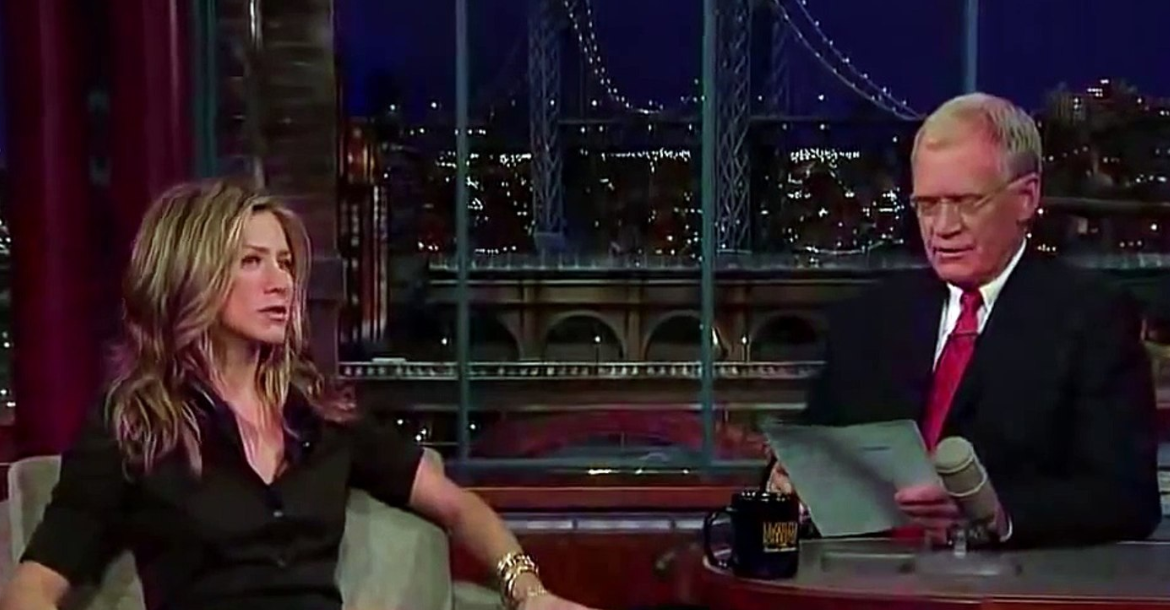
Discussions about changing cultural norms often emerge when older television clips reappear online, and a series of David Letterman interviews with Jennifer Aniston has renewed that conversation. Letterman, known for his long career in late-night television, built a reputation on humor and spontaneity. However, some past moments now stand out as examples of how expectations surrounding media conduct have shifted over time. One commonly referenced instance comes from a 2006 appearance in which Aniston visited The Late Show to discuss her film The Break-Up. During the segment, Letterman focused heavily on her appearance—particularly her legs—creating an exchange that feels noticeably different from what audiences today would expect.
Throughout the interview, Letterman repeatedly returned to comments about her appearance, at one point joking that the camera angle should be recorded for viewers at home. The remarks diverted attention away from Aniston’s work, leaving her to respond politely while steering the conversation back toward her film. Letterman also touched on rumors regarding her co-star Vince Vaughn and asked about a scene from the movie, which Aniston addressed with professionalism as she worked to keep the discussion centered on her project.
This was not the only interview of theirs that has resurfaced. A 1998 clip that circulates frequently online shows Letterman briefly interacting with a strand of Aniston’s hair during their conversation—an unscripted moment that appeared surprising at the time and is now viewed by many modern audiences as an example of outdated norms. Despite the unexpected nature of the interaction, Aniston maintained her composure and continued the interview.
Looking back at moments like these offers insight into how standards for conduct in media environments have evolved. Behaviors once framed as humor or spontaneity are now widely understood through a different lens, shaped by broader cultural conversations about respect, boundaries, and professionalism. These resurfaced interviews underscore how expectations have progressed when it comes to creating environments where guests feel comfortable and are recognized for their work. They also serve as a reminder of the ongoing importance of thoughtful, considerate interactions in public and media settings.