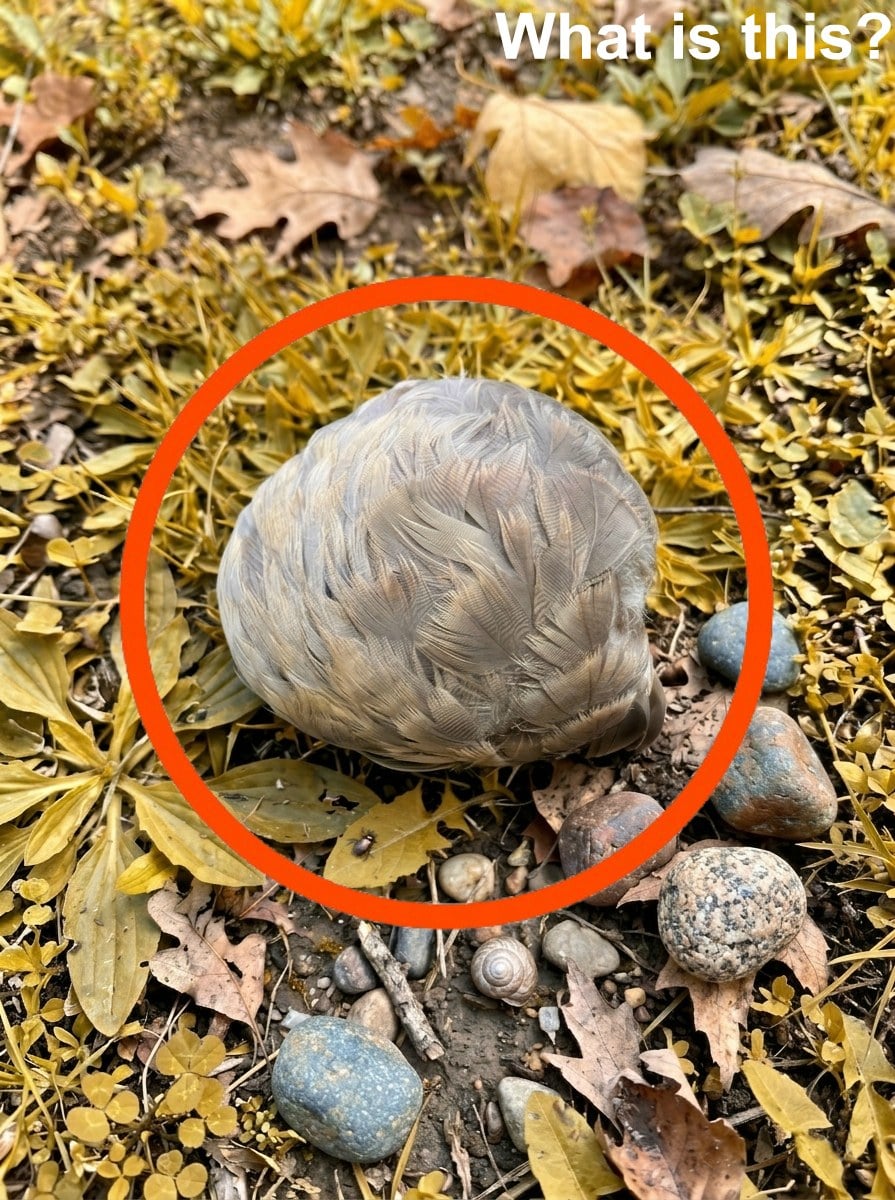
My son and I were walking along the lake when we noticed something unusual at our feet. At first glance, it looked almost whole—like a small bird resting quietly. But something felt off. It was too still and unusually light, almost like a shape without substance. When we looked closer, it became clear that what we were seeing wasn’t what it first appeared to be.
It wasn’t anything mysterious or unusual. It was simply what remained after a predator had taken its meal. An animal such as a fox, stray cat, or bird of prey had likely eaten what it needed, leaving behind a cluster of feathers. The body itself was gone—no visible remains—just a soft outline that still resembled the bird it once was.
At first, my son felt uneasy, but as we stood there, his reaction slowly changed. I explained how animals in nature take what they need to survive and leave behind what they cannot use. Feathers offer little nutritional value, so they are often what remains. What seemed strange at first was actually a normal part of the natural cycle.
As we continued walking, he glanced back a few times, quietly thinking. It was one of those simple moments that can shift perspective. Nature is not just gentle or harsh—it includes both. Scenes like this, while unexpected, can offer a deeper understanding of how life continues in its own steady balance.