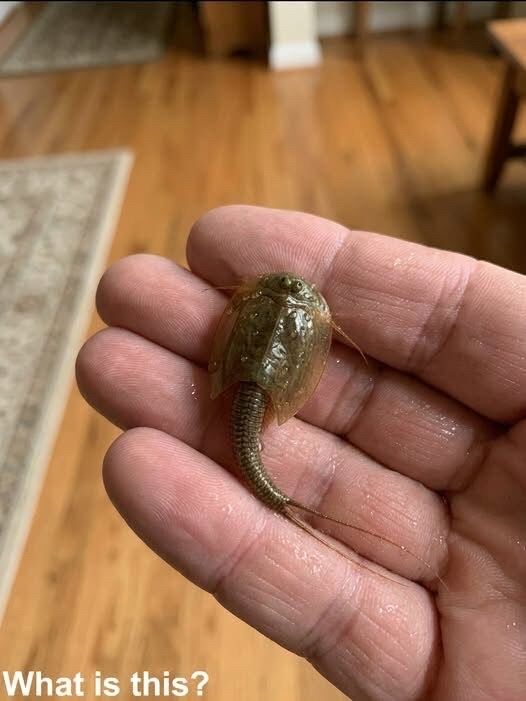
After a heavy storm moved through the neighborhood, I stepped outside to check the drainage ditch near the edge of my property. The rainfall had transformed it into a shallow, cloudy pool filled with leaves, soil, and slowly drifting debris. At first, it appeared to be nothing more than ordinary floodwater settling back into the ground. However, as I looked closer, I noticed something unusual moving beneath the surface—small, quick, and surprisingly coordinated in its movement.
Curious to understand what I was seeing, I carefully collected a small sample of the water in a glass jar to observe it more closely. Once inside, I placed the jar under bright kitchen lighting for better visibility. The organism inside appeared unfamiliar at first, with a rounded body and many small legs moving rapidly in different directions. Its unique appearance immediately raised questions, and I wondered what it could be.
Rather than making assumptions, I decided to look for reliable information and compare my observation with trusted sources. After some research, I learned that the organism was a Triops, a small freshwater crustacean commonly found in temporary pools formed after rainfall. Although it may look unusual, it is completely harmless and has existed in a similar form for millions of years. What initially seemed strange turned out to be a natural example of how certain species adapt to changing environments.
With this new understanding, my perspective changed completely. The initial uncertainty turned into appreciation for the diversity and resilience of nature, even in unexpected places. What started as a moment of curiosity became a reminder that unfamiliar discoveries are not necessarily negative—they can simply be a fascinating part of the natural world waiting to be understood.