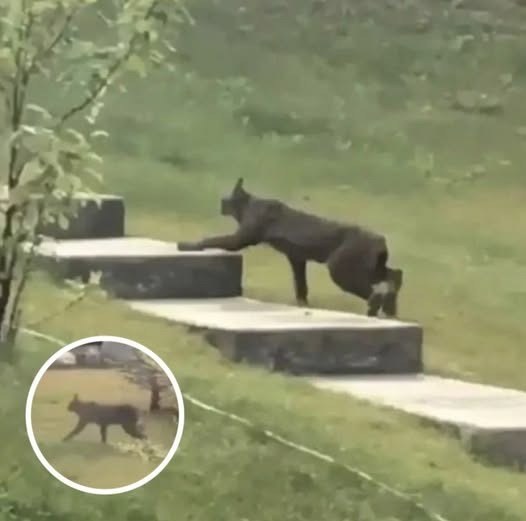
Canadian researchers have documented a rare wildlife moment after recording a melanistic Canada lynx on a mobile phone, marking an unprecedented observation for the species. The lynx’s unusually dark fur immediately distinguished it from typical individuals, prompting further review by experts. Researchers confirmed that this appears to be the first officially documented case of melanism in a Canada lynx, making the footage a valuable contribution to wildlife research and conservation records.
Canada lynx are normally recognized by their light gray or reddish-brown coats, which help them blend into snowy, forested environments. The appearance of a dark-coated individual was unexpected and has raised new questions about genetic variation within the species. While visually striking, scientists noted that darker fur may reduce natural camouflage in winter landscapes, potentially affecting hunting success and visibility in habitats where lighter coloring is usually advantageous.
The sighting has also renewed scientific interest in how environmental conditions may influence physical traits in animals. Some research suggests that changes in climate and habitat can affect the occurrence of darker pigmentation in certain species. However, experts emphasize that a single observation cannot confirm broader trends. Even so, this finding provides an opportunity to further explore how genetics and environmental factors may interact over time.
Beyond its scientific value, the footage has captured public interest and highlighted how much remains to be discovered in nature. Researchers hope the attention will support ongoing monitoring and conservation efforts aimed at understanding and protecting wildlife diversity. The melanistic Canada lynx serves as a rare example of natural variation, reinforcing the importance of preserving ecosystems where such unique traits can continue to emerge and be studied.