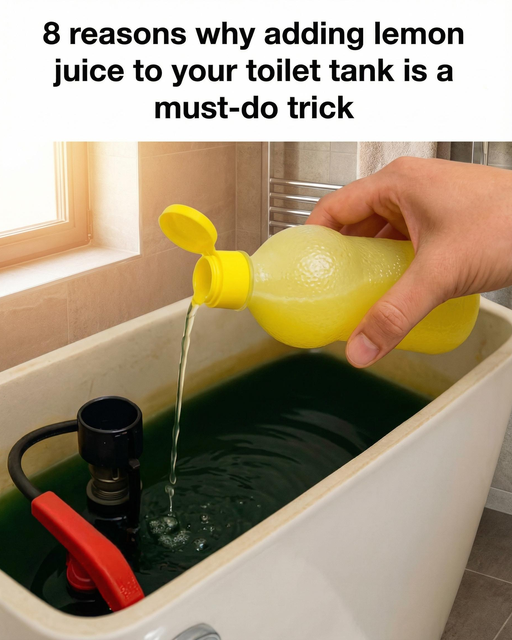
Most people focus their bathroom cleaning efforts on visible surfaces such as sinks, mirrors, and toilet bowls, while the toilet tank is often overlooked. Although hidden from view, the tank plays an important role in flushing performance and overall cleanliness. Over time, mineral residue, bacteria, and odors can build up inside, affecting how the toilet functions and smells. Keeping the tank clean does not require strong chemicals, and a common household ingredient like lemon juice can be a practical option.
Lemon juice is widely known for its natural cleaning properties. Its mild acidity helps loosen mineral deposits caused by hard water, while its cleansing qualities support a fresher environment inside the tank. When added to the tank, lemon juice can help reduce odor buildup and keep internal surfaces cleaner over time. Unlike many commercial cleaners, it does not release strong fumes or leave behind harsh residues, and it provides a light, fresh scent that subtly improves the bathroom atmosphere.
Regular use of lemon juice may also help reduce mineral buildup that can affect toilet components. Deposits can interfere with parts such as the flapper or float, sometimes leading to inefficient flushing or continuous water flow. By helping dissolve buildup naturally, lemon juice allows these parts to move more freely and function properly. This gentle approach can support long-term performance while also being biodegradable and more environmentally conscious than many chemical alternatives.
Using lemon juice in the toilet tank is simple and inexpensive. Pouring about one cup of plain lemon juice into the tank and letting it sit for 30 to 60 minutes before flushing allows time for it to work on residue and odors. Repeating this process every few weeks can help maintain cleanliness with minimal effort. This easy habit supports a fresher tank, smoother flushing, and a cleaner-smelling bathroom, showing that simple, natural solutions can be both effective and practical.