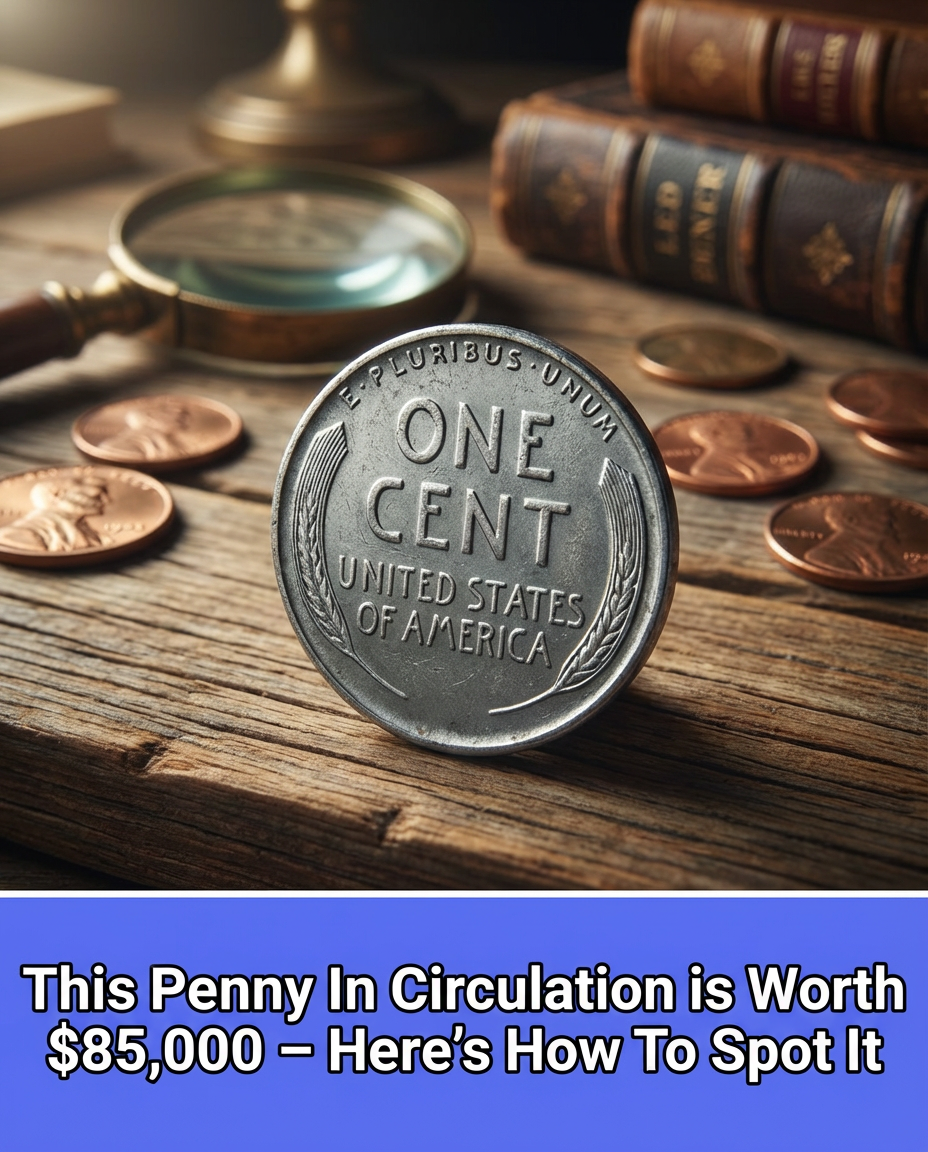
Most people rarely examine their loose change before setting it aside or spending it without a second thought. Pennies, especially, are often overlooked because of their low face value and everyday appearance. However, collectors know that certain coins can be far more valuable than they seem. In rare cases, an ordinary-looking penny can be worth a substantial amount due to unique circumstances tied to its production.
This possibility traces back to a key period in United States history. In 1943, during World War II, copper was in high demand for military use. As a result, the United States Mint produced most pennies that year using zinc-coated steel instead of copper. These steel pennies have a noticeably gray tone. Despite the change, a small number of pennies were mistakenly struck on leftover copper blanks and entered circulation without immediate detection.
These unintended copper pennies from 1943 are now considered among the rarest examples in American coin collecting. It is believed that fewer than two dozen genuine pieces still exist. Because of their scarcity and historical background, collectors may pay tens of thousands of dollars for one, with value depending on condition and authenticity. Even coins showing signs of wear can attract significant interest due to their rarity.
There are a few simple steps to check whether a penny might be one of these rare examples. The coin should display the 1943 date, have a copper-colored appearance, and show the wheat-ear design on the reverse side. A basic magnet test can also help, as copper coins will not be magnetic. Any coin that appears promising should be evaluated by a professional for confirmation. Stories like this highlight that valuable items can sometimes be found in everyday places, rewarding those who take the time to look more closely.