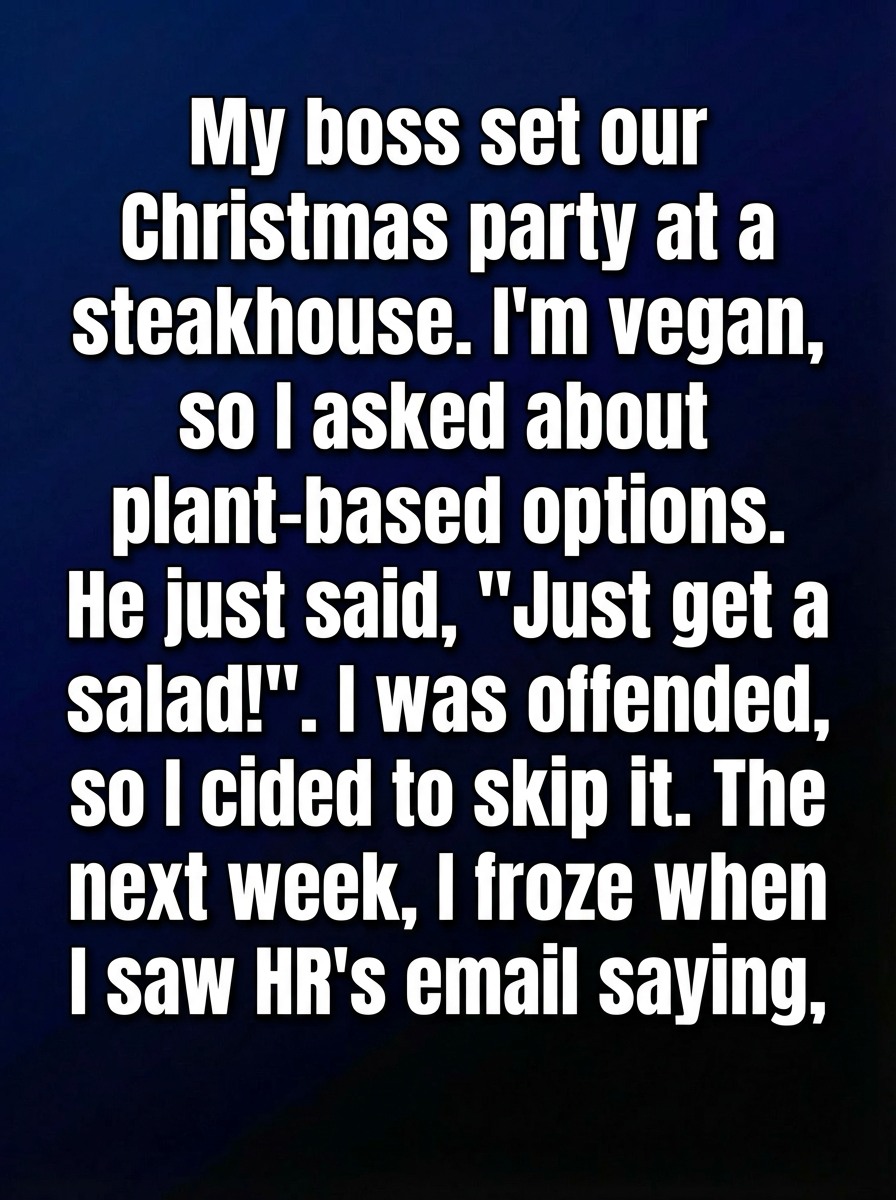
When the invitation for the company’s holiday gathering arrived, I paused before responding. The event was planned at a steakhouse, and I have followed a vegan lifestyle for years based on personal values and health reasons. Wanting to plan ahead, I asked my manager whether any plant-based options would be available. His brief reply suggested I could “just get a salad,” and while the words were simple, the tone felt dismissive. It gave me the impression that my needs were being minimized, so after some thought, I chose not to attend the event.
The following week, as work returned to its usual pace, an email from Human Resources appeared in my inbox referencing the holiday gathering. Initially, I felt uneasy, unsure if my absence had caused an issue. However, the message focused on improving company practices rather than attendance. HR shared updated guidelines for future events, highlighting inclusivity, dietary awareness, and respectful communication, and encouraged employees to speak openly about their needs.
What followed was an unexpected shift in the workplace atmosphere. Team discussions became more considerate, and my manager later approached me privately to acknowledge that his response had not been thoughtful. He expressed that he had not fully considered how his comment might come across and shared that he was taking the feedback seriously. The conversation was calm and genuine, and it helped establish a sense of mutual understanding and respect.
By the time the next company event was organized, noticeable changes had been made. Invitations included space for dietary preferences, and venues were selected with broader options in mind. The situation became about more than food; it reflected a culture of awareness and respect. Choosing not to attend the original event felt small at the time, but it led to positive adjustments that benefited many. It showed that standing by personal values can encourage meaningful improvements and help create a more inclusive workplace for everyone.