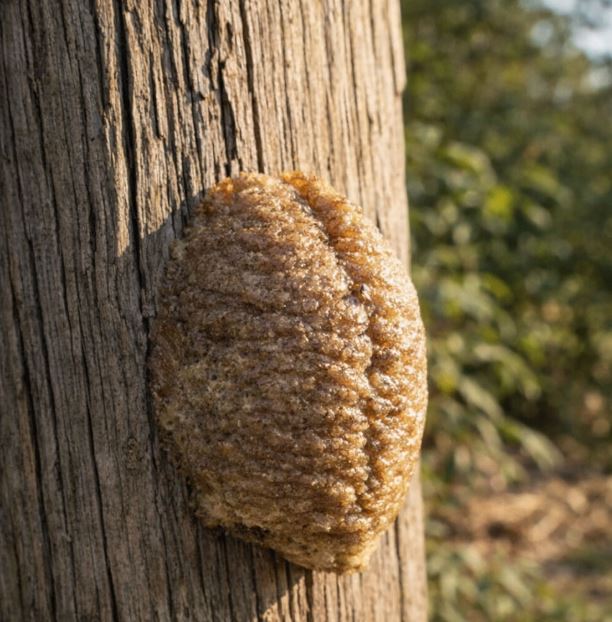
Discovering an unusual object in your yard can be surprising, especially when it appears attached to a fence, branch, or outdoor structure without warning. A small brown foam-like shape may initially seem unfamiliar or concerning, but in many cases it has a completely natural explanation. These structures are often harmless and can even contribute positively to the health of a garden or outdoor environment.
In many situations, the object is a praying mantis egg case, commonly known as an ootheca. Created during late summer or fall, the protective casing is formed by a female praying mantis to shelter her eggs during colder months. As the material hardens, it helps protect developing mantises from weather conditions and predators throughout the winter season. Although compact in size, a single egg case may contain many young mantises waiting to emerge when temperatures become warmer.
Praying mantis insects are widely recognized for their role in supporting balanced garden ecosystems. They feed on various insects that may affect plants, including flies, caterpillars, and aphids. When spring arrives, the young mantises hatch and move into surrounding vegetation, where they continue contributing to natural pest control. Their presence is often viewed as a positive sign of a healthy outdoor environment with active biodiversity.
If one of these egg cases is discovered, experts generally recommend leaving it undisturbed whenever possible. If relocation becomes necessary, it is usually safer to move the branch or surface it is attached to rather than attempting to remove the structure directly. Encounters like these can provide an opportunity to observe nature more closely and better appreciate the many small processes that quietly support local ecosystems and backyard wildlife.