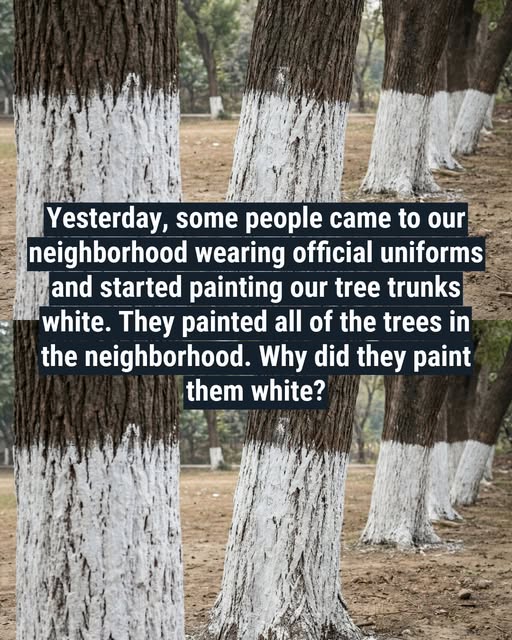
If you have ever noticed a tree with the lower part of its trunk painted white, it may look decorative at first. In reality, the coating is usually applied for protection. Gardeners and orchard growers use this method to help protect trees from a condition called sunscald. Sunscald can occur during winter when sunlight warms the bark during the day and temperatures drop quickly at night. These rapid temperature changes may cause the bark to crack or split.
A light-colored coating helps reflect sunlight and keeps the trunk from heating too quickly. By reducing sudden temperature changes, the paint helps maintain a more stable surface temperature on the bark. This protection is especially useful for young trees, fruit trees, and ornamental varieties with thinner bark, which are generally more sensitive to temperature shifts during colder months.
To create the protective coating, gardeners often mix diluted latex paint with water. A common mixture is about one part paint and one part water, producing a lighter solution that coats the trunk without affecting the tree’s growth. The mixture can be brushed onto the lower section of the trunk to create even coverage and help the protective layer last longer through the season.
While some trees may have markings for other reasons, such as property boundaries or forestry management, a white-painted trunk is most often a sign of routine tree care. The practice helps reduce environmental stress and protect the bark during challenging weather conditions. For gardeners and orchard caretakers, this simple step is part of maintaining healthy trees that can continue growing strong for many years.