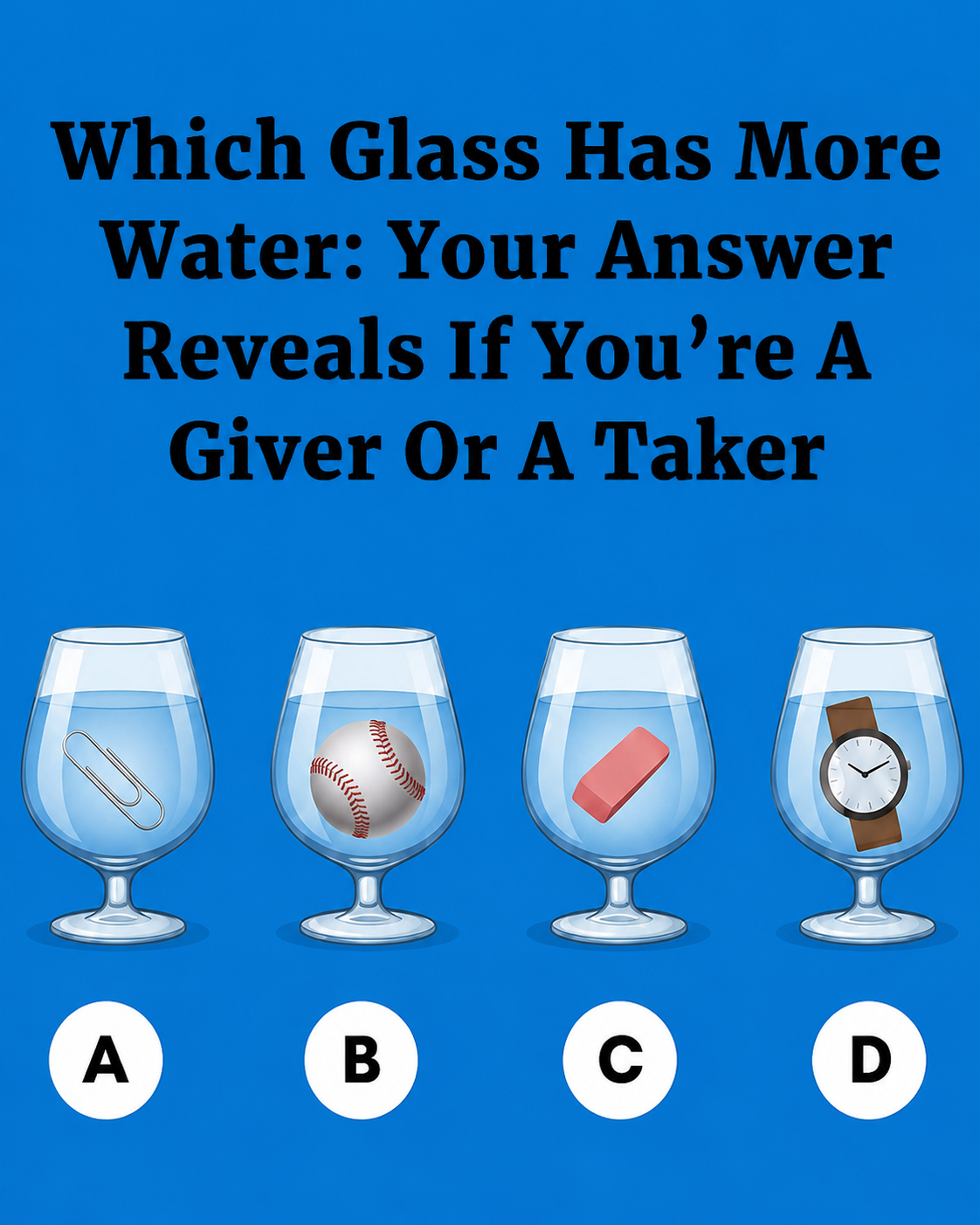
This visual puzzle featuring four identical glasses labeled A, B, C, and D offers an interesting combination of observation, logic, and basic physics. Each glass appears to contain the same water level, but each one also holds a different object, including a paperclip, baseball, eraser, and wristwatch. The challenge encourages viewers to think carefully about which glass actually contains the greatest amount of water.
The answer is based on the scientific principle of displacement. When an object is placed into water, it takes up space and pushes the water level higher. Larger objects displace more water, while smaller objects displace less. Because of this, the glass containing the smallest object will hold the greatest amount of actual water. In this example, Glass A, which contains the paperclip, contains the most water overall.
The other glasses demonstrate how object size changes water volume differently. Glass B contains a baseball, which displaces the most water because of its larger size. Glass C contains an eraser, while Glass D includes a wristwatch, both creating moderate displacement. Although the glasses may initially appear identical, closer observation and logical reasoning reveal the hidden difference.
Beyond the science itself, puzzles like this highlight how people interpret information in different ways. Some individuals focus on visual impressions, while others pay closer attention to details and underlying logic. Exercises like this can encourage critical thinking, observation skills, and thoughtful problem-solving in everyday situations. Sometimes, small details can provide the clearest answers when viewed carefully.