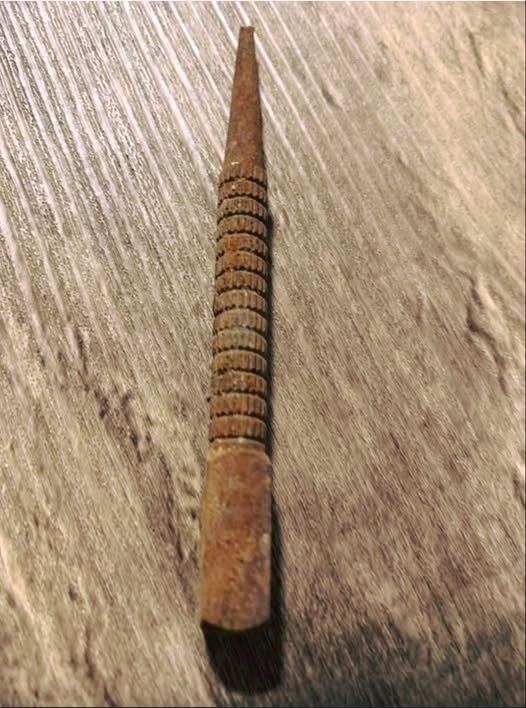
Among the wide variety of tools found in workshops and toolboxes, some of the most useful are often the ones that receive the least attention. While larger power tools are frequently recognized for their capabilities, smaller hand tools play an equally important role in achieving accurate and professional results. One example is the nail punch, also known as a nail set, a practical tool that has supported woodworking and construction projects for many years.
The main function of a nail punch is to drive a nail head slightly below the surface of a material without affecting the surrounding area. The tool is positioned on the nail head and gently struck with a hammer, allowing the nail to be recessed neatly into the wood. This process makes it easier to apply wood filler, paint, or other finishing materials, helping create a smooth and polished appearance that enhances the overall quality of the project.
Tools designed for this purpose have been used in different forms throughout history. Early builders and craftspeople relied on simple metal tools to secure materials while maintaining a clean finish. As woodworking methods evolved and manufacturing techniques improved, more specialized versions were developed to provide greater precision and consistency. Over time, the nail punch became a valuable tool in furniture making, cabinetry, trim work, and other detailed woodworking applications.
Today, nail punches are commonly manufactured from durable materials such as hardened steel, enabling them to withstand regular use over long periods. They are available in a range of sizes to accommodate different nail types and project requirements. Although compact in design, these tools continue to demonstrate the importance of precision and attention to detail, proving that even the smallest tools can contribute significantly to the quality and appearance of finished work.